
Foot and Ankle Pain Treatment in Happy Valley, OR
Your foot hits the ground thousands of times a day. When something goes wrong down there — a rolled ankle, a tendon that won't settle down, that first-step-in-the-morning heel pain — it doesn't stay local. It changes how you walk, how you train, and how much you're willing to do. People with foot and ankle pain often start compensating without realizing it, and before long the knee, hip, or low back is picking up the slack.
Whether you're dealing with a fresh sprain, a nagging tendinopathy that's been lingering for months, plantar fasciitis that flares every time you ramp up mileage, or you're working your way back from surgery — the foot and ankle respond well to the right kind of loading. Rest alone rarely fixes it. The tissue needs to be gradually challenged to rebuild its capacity, and that process needs to be specific to what you're actually trying to get back to.
What's Causing Your Foot and Ankle Pain?
Foot and ankle pain shows up in a lot of different ways, but the underlying patterns are usually one of a few things:
Ankle instability and recurrent sprains — the most common ankle injury in active people, and one of the most under-rehabbed. A single sprain that doesn't go through a proper strengthening program often leaves behind subtle weakness and balance deficits that set the stage for the next one. If you keep rolling the same ankle, that's not bad luck — it's a pattern that can be fixed. For a practical breakdown of what to do immediately after a sprain, Sprained Ankle: When to Rest, When to Rehab, When to See a Physical Therapist is a good place to start.
Plantar fasciitis — pain at the bottom of the heel, typically worst with the first steps in the morning or after prolonged sitting. Almost always a load management issue: the plantar fascia is being asked to absorb more stress than it's currently prepared for. Stretching helps in the short term; progressive loading is what actually resolves it.
Tendinopathy — Achilles, peroneal, posterior tibialis — tendons that have been repeatedly overloaded develop a degenerative response that doesn't respond well to rest or anti-inflammatories alone. The research is clear that progressive tendon loading is the most effective long-term treatment.
Post-surgical rehab— whether it's an Achilles repair, ankle reconstruction, or fracture fixation, getting the foot and ankle moving correctly after surgery requires a structured, graduated approach. Coming back too fast and coming back too slow are both problems.
Stress reactions and overuse injuries — common in runners and endurance athletes who increase training load faster than their tissue can adapt. The foot and ankle are often the first place this shows up.
What the Research Says
Recurrent ankle sprains are more than just a nuisance — research consistently shows that a single inadequately rehabbed sprain creates lasting deficits in strength, proprioception, and balance that significantly increase the risk of future injury. The good news is that a progressive program targeting these deficits can restore stability and break the cycle.
For tendon and plantar fascia pain, the evidence strongly favors progressive loading over passive treatment. Rest reduces symptoms temporarily but doesn't address the underlying tissue capacity — which is why these conditions tend to come back when activity resumes. Structured loading protocols have been shown to produce better long-term outcomes than rest, orthotics, or anti-inflammatories used in isolation.
Active rehabilitation consistently outperforms passive treatment for foot and ankle conditions when the goal is returning to full activity — not just getting through the day.
Timber and Iron's Approach to Foot and Ankle Pain
The foot and ankle are load-bearing structures. The goal of treatment isn't to protect them from stress — it's to build their capacity to handle it.
At Timber and Iron, every appointment is 60 minutes, one-on-one with Dr. Ryan Eckert. Ryan will assess how your ankle moves, how your foot loads, and how your whole lower chain is functioning — because foot and ankle problems rarely exist in isolation. A stiff ankle affects how the knee tracks. Weak hip stabilizers change how force travels down to the foot. Getting a complete picture is what separates a treatment plan that works from one that just manages symptoms.
The short-term focus is reducing pain and swelling and restoring mobility. The longer-term focus is rebuilding the strength, balance, and tissue capacity that lets you get back to running, hiking, lifting, or whatever it is you're working toward — without the constant fear of reinjury.
Treatment we use for foot and ankle pain:
Manual Therapy — hands-on joint mobilization to restore ankle and foot motion
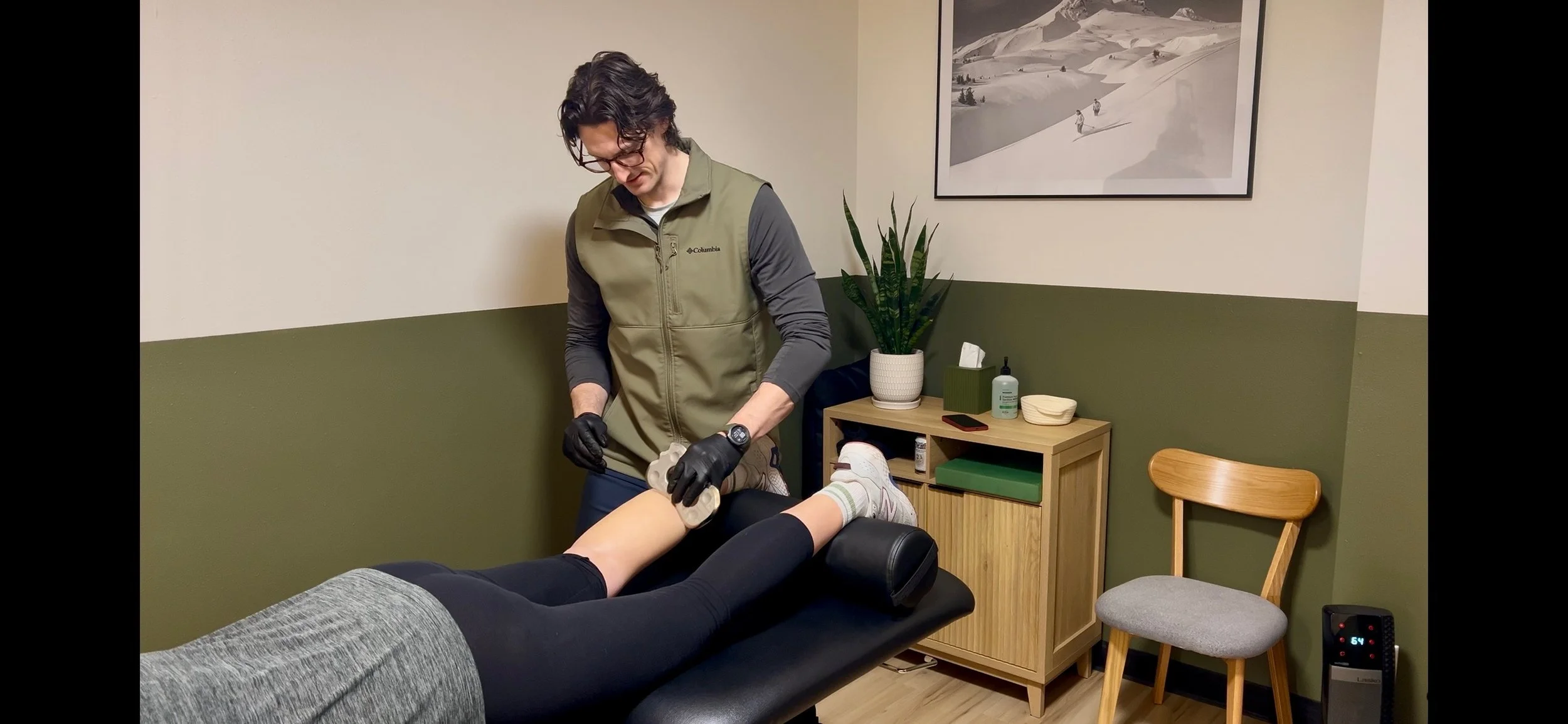
IASTM (Instrument Assisted Soft Tissue Mobilization) — targeted work on tendon and fascial restrictions
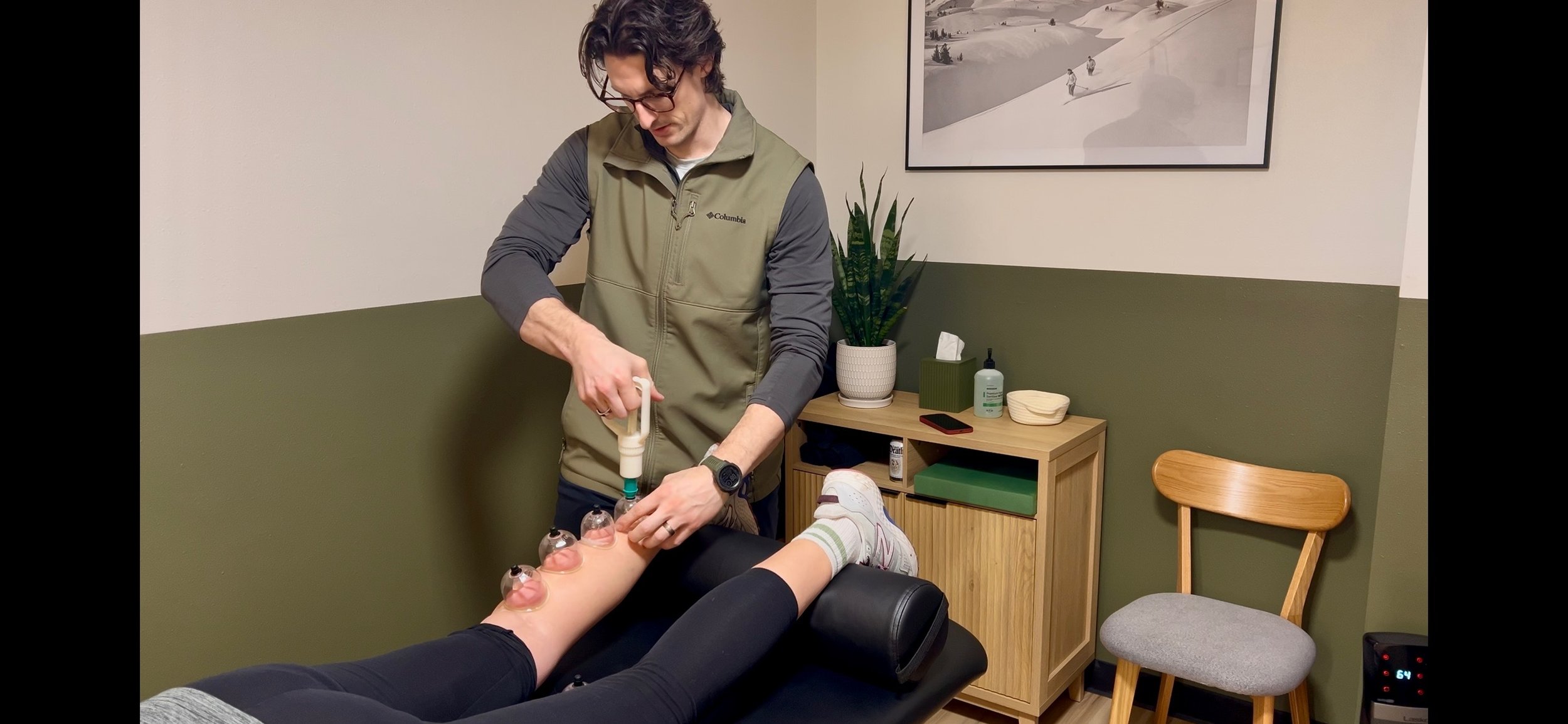
Myofascial Decompression (Cupping) — decompress tight tissue and improve circulation to the affected area
Blood Flow Restriction Training (BFR) — allows meaningful muscle and tendon loading at lower resistance levels, particularly useful early in rehab or post-surgery when full loading isn't yet appropriate
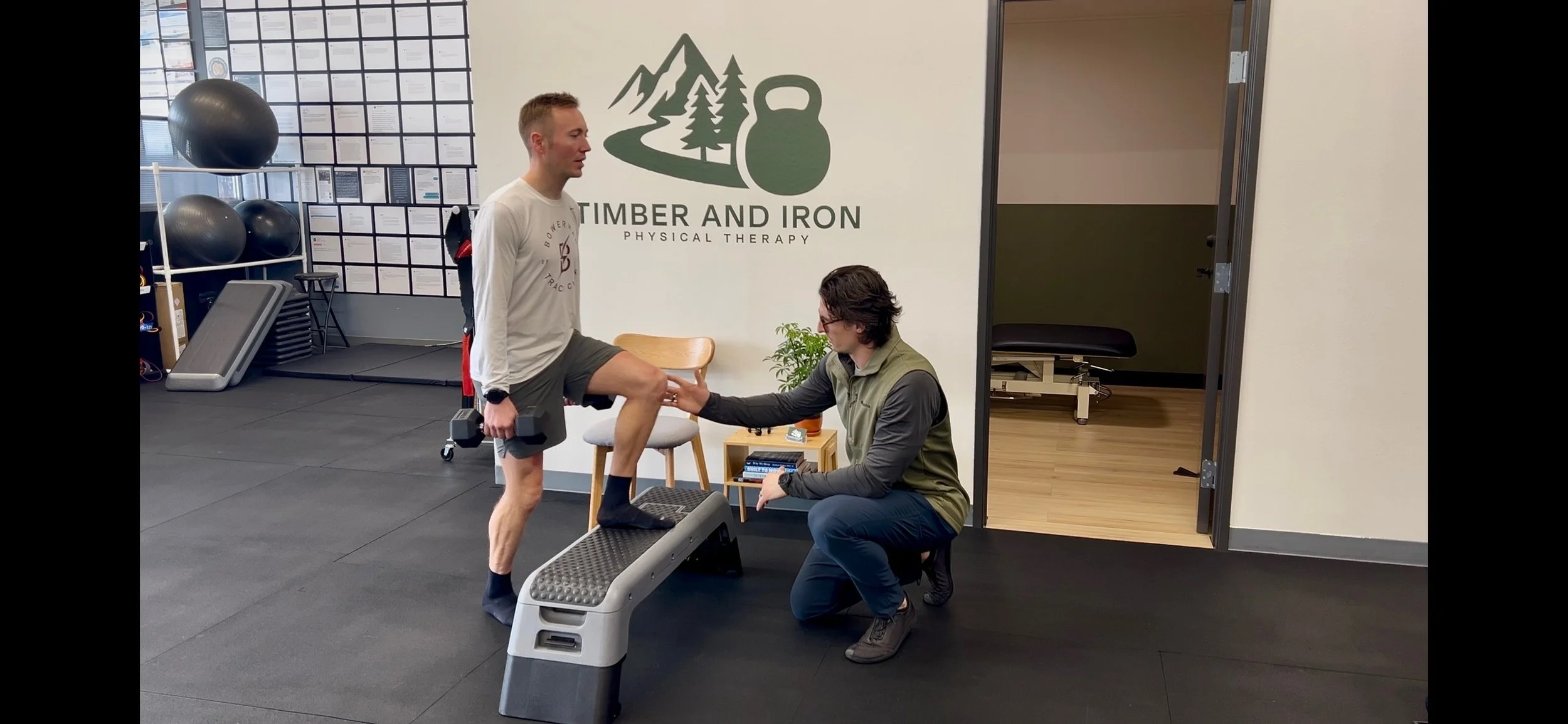
Exercise Prescription — progressive strengthening, balance, and stability programming specific to your activity goals
Gait Training — address movement pattern contributions to foot and ankle load
What to Expect at Your First Appointment
Your first visit is a full hour with Ryan. You'll walk through what happened, how long it's been going on, what makes it better or worse, and what you're trying to get back to. From there, Ryan will assess your ankle mobility, foot mechanics, balance, and how load is being distributed through your lower leg.
Most patients leave the first appointment with a clear explanation of what's driving the pain and immediate tools to start managing it — whether that's specific exercises, a modified training plan, or both. No waiting for a follow-up to get started.
Oregon is a direct access state, which means you can book directly — no referral required.
Common Questions About Foot and Ankle Pain
I sprained my ankle a few weeks ago and it still doesn't feel right. Should I come in?
Yes — this is exactly the window where PT makes the biggest difference. The acute pain may have settled, but the strength and balance deficits that increase your risk of reinjury are still there. A few targeted sessions now can prevent months of recurring problems later.
I've had plantar fasciitis for months and it's not getting better. What am I missing?
Most plantar fasciitis that doesn't resolve with stretching and rest is a loading problem — the tissue hasn't been progressively challenged to rebuild its capacity. If you've been managing symptoms without a structured loading program, that's usually the missing piece.
Can I keep training while I'm being treated?
In most cases, yes — with modifications. One of the goals of treatment is figuring out what you can keep doing while the tissue heals, rather than shutting everything down and starting from scratch. Complete rest is rarely the right answer for foot and ankle conditions.
Do I need imaging before I come in?
Not for most presentations. A hands-on evaluation gives more actionable information than an X-ray or MRI for the majority of foot and ankle conditions. If we identify a reason to refer you for imaging — a suspected fracture, for example — we'll tell you directly.
Do I need a referral?
No. Oregon is a direct access state — you can book at Timber and Iron without a physician referral.
Ready to stop babying your foot and start building it back up? Book directly at HERE— no referral needed in Oregon.
This content is for educational purposes only and does not constitute medical advice. For guidance specific to your situation, schedule a consultation with Dr. Ryan Eckert at Timber and Iron Physical Therapy.