
Strength and Movement Assessment in Happy Valley, OR
You've put in the work. The training hours, the programming, the attention to recovery. But if your movement patterns under load aren't right, there's a ceiling on what you can build, and a floor beneath which injury becomes more likely than progress.
Most lifters who come in for a Strength and Movement Assessment aren't broken. They're serious about what they do and want to make sure they're doing it correctly. Maybe there's a nagging hip shift in the squat that won't go away. A shoulder that complains on overhead pressing days. A deadlift that feels off but nothing has clicked into place despite cues from coaches and hours of video review. Or maybe there's no pain at all and they just want to move better, lift more, and stay healthy long enough to keep doing it.
That's exactly what this assessment is built for.
Why Movement Quality Under Load Matters
Lifting is a skill. The barbell doesn't care how strong you are if your mechanics break down under fatigue or as weight increases. Small deviations in positioning, bracing, or bar path that are invisible at lighter loads become significant stressors on joints and tissue as intensity climbs.
The most common patterns we see:
Hip and low back loading issues, a squat or deadlift that loses lumbar position, shifts to one side, or relies on passive structures rather than active musculature is quietly accumulating stress with every rep. Over a training career, that adds up. Our Low Back Pain treatment page and Hip Pain treatment page cover what those presentations look like when they become symptomatic.
Knee tracking and valgus collapse, when the knees cave under load it signals a combination of hip weakness, ankle mobility limitation, and motor control deficit that affects both performance and injury risk. Our Knee Pain treatment page covers the downstream effects in more detail.
Shoulder positioning on pressing and overhead movements, a forward head position, limited thoracic mobility, or insufficient rotator cuff control changes how the shoulder loads through every press and overhead rep. Our Shoulder Pain treatment page covers what happens when those patterns become painful.
Bracing and intra-abdominal pressure deficits, one of the most common and most correctable issues in lifters at every level. Learning to brace correctly under load is not complicated, but it requires someone who can actually watch you lift and give you feedback in real time.
Compensations from old injuries, a previous ankle sprain, a hip that was never fully rehabbed, a shoulder that was rested but never properly strengthened. These leave behind movement habits that feel normal until they become a limiting factor under heavier loads.
What the Research Says
Strength training is one of the most well-supported interventions in sports medicine for both injury prevention and long-term health. A 2014 meta-analysis by Lauersen and colleagues found that progressive strength training reduced overuse injury risk substantially across athletic populations. The key word is progressive: the tissue needs to be loaded appropriately and advanced systematically to adapt.
Video-based movement analysis improves the accuracy of identifying mechanical faults compared to observation alone. Your physical therapist can see things in slow motion review that aren't visible in real time, particularly at higher loads where compensations become most pronounced.
Mobility limitations that restrict movement quality under load are often addressable. Stretching vs. Mobility: What the Research Really Says About Movement Quality covers the distinction between flexibility and mobility and why that difference matters for how you train and how you address restrictions.
Building training volume appropriately is as important as movement quality. Starting Your New Year Workout Routine: How to Build Momentum Without Breaking Down covers the load management principles that apply whether you're returning from a break or pushing into a new training block.
Timber and Iron's Approach to Strength and Movement Assessment
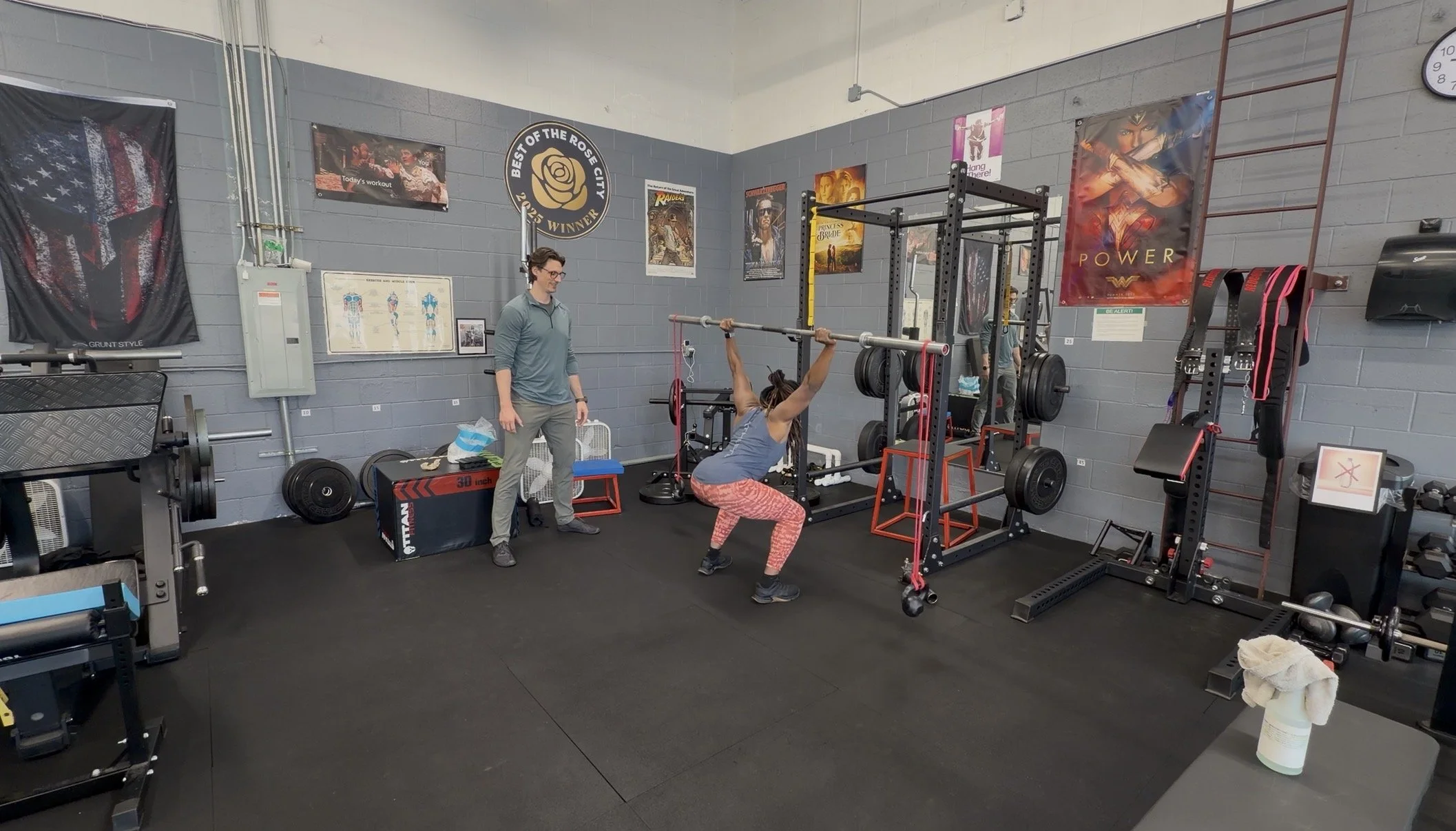
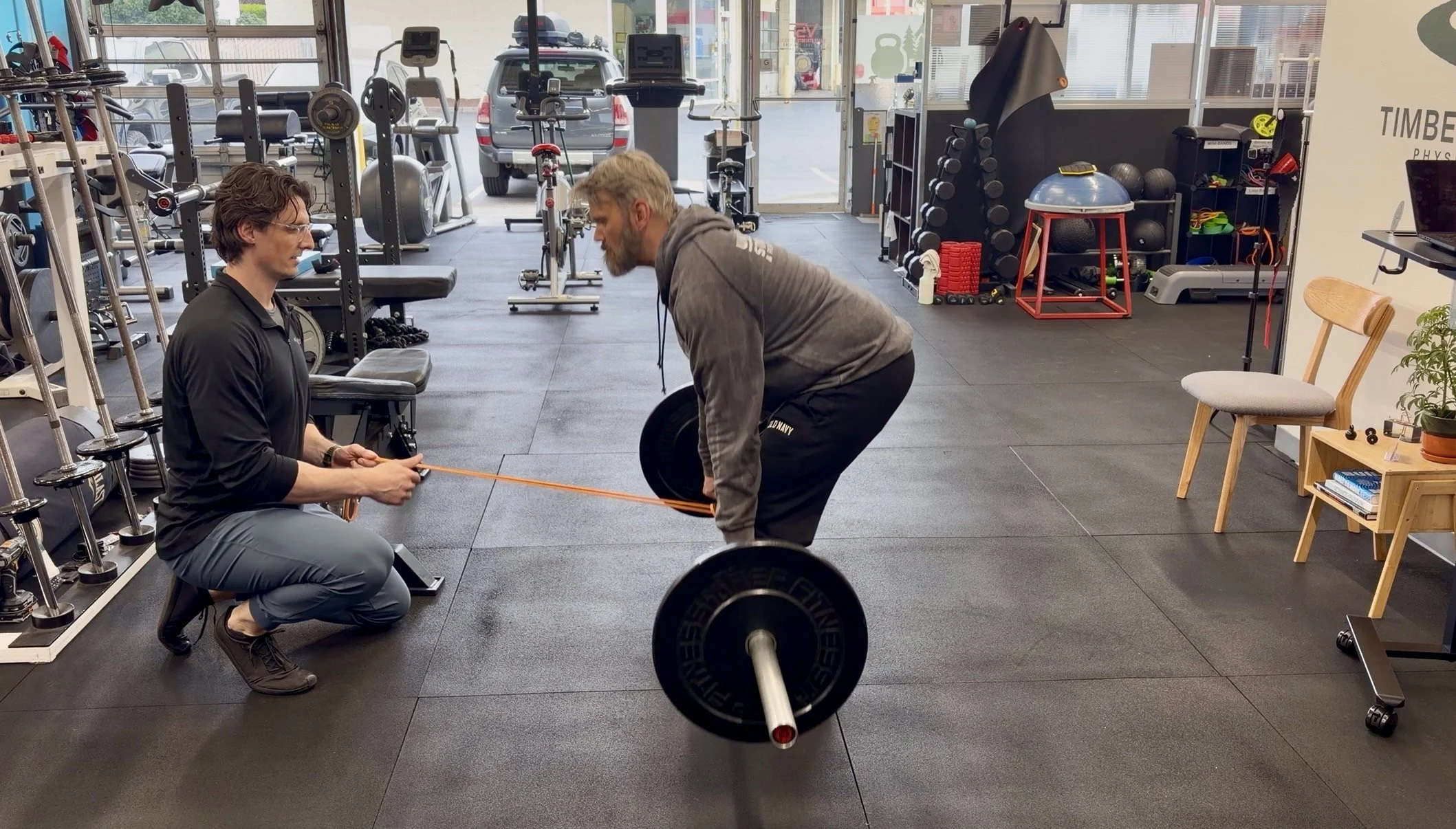
A Strength and Movement Assessment at Timber and Iron is a dedicated session with your physical therapist, combining clinical movement expertise with genuine strength training knowledge. This isn't a generic movement screen. It's a specific evaluation of how you lift, where your limitations are, and what changes will have the most meaningful impact on your performance and longevity.
The session includes video analysis of your primary lifts, whether that's squat, deadlift, press, Olympic lifts, or the specific movements that are giving you trouble. Your physical therapist will assess your strength, mobility, and stability off the bar as well as under load, because restrictions that don't show up in a bodyweight assessment often become apparent when the barbell is added.
Where hands-on work is indicated, your physical therapist will address mobility and movement restrictions directly in the session. You'll leave with specific coaching cues, a clear picture of your mechanical strengths and limitations, and a personalized plan to reinforce what's working and address what isn't.
For lifters dealing with pain alongside mechanical issues, the assessment can be integrated into a broader treatment plan. If you've been dealing with a gym-related injury and want to understand how PT approaches that, CrossFit Injuries: How Physical Therapy Keeps You in the Gym and Out of Pain is worth reading before your first appointment.
The goal is practical: leave the session lifting better than you came in, with a roadmap for what to work on next.
Who Benefits from a Strength and Movement Assessment
CrossFit athletes working on Olympic lifting mechanics, managing high training volumes, or trying to identify what's limiting their performance on specific movements.
Powerlifters pursuing new PRs who want a clinical eye on their squat, bench, and deadlift mechanics before pushing deeper into a strength cycle.
Recreational lifters who are self-coached or have plateaued and want specific, evidence-based feedback rather than another YouTube rabbit hole.
Athletes experiencing pain or discomfort with lifting who need to understand the mechanical contribution before committing to a full treatment plan.
Anyone who wants to move better, lift more efficiently, and train with the kind of confidence that comes from knowing your mechanics are sound.
What to Expect at Your Assessment
Your assessment is a full dedicated session with your physical therapist. Bring your training shoes and any specific equipment you use regularly, like a belt or lifting shoes, as these affect mechanics and should be part of the evaluation.
You'll walk through your training history, your current programming, any pain or movement concerns, and your goals. From there, your physical therapist will run you through the relevant lifts and movement screens, using video review to identify patterns that aren't visible in real time. Most athletes leave with immediate cues they can apply in their next training session, not just a list of mobility exercises to do at home.
Oregon is a direct access state. No referral is needed to book a Strength and Movement Assessment or any PT service at Timber and Iron.
Common Questions About Strength and Movement Assessment
I'm not injured. Is a Strength and Movement Assessment still worth doing?
Yes, and in some ways it's more valuable before injury than after. Identifying the mechanical patterns that increase injury risk while you're still training pain-free means you can address them before they become a problem. Most athletes who come in without pain leave with at least one or two meaningful things to work on.
How is this different from working with a coach?
A strength coach and a PT bring different but complementary lenses. A coach focuses on performance and programming. A physical therapist brings a clinical understanding of tissue loading, injury mechanics, and movement dysfunction that changes what they look for and what they recommend. The two work well together, and findings from the assessment are easy to share with your coach if you have one.
Can I bring video of my lifts from training?
Yes, and it's encouraged. Training footage, especially at heavier loads or higher fatigue levels, shows patterns that don't always appear in a fresh assessment environment. The more context your physical therapist has, the more specific the feedback.
What if I have pain during lifting?
The assessment can still be conducted, with modifications as needed. If pain is the primary driver, your physical therapist will assess both the mechanical contributors and the tissue involved, and the session may naturally transition into the beginning of a treatment plan rather than a standalone assessment.
Do I need a referral?
No. Oregon is a direct access state, which means you can book at Timber and Iron without a physician referral.
Ready to move better and lift stronger? Book your Strength and Movement Assessment at HERE, no referral needed in Oregon.
This content is for educational purposes only and does not constitute medical advice. For guidance specific to your situation, schedule a consultation at Timber and Iron Physical Therapy.