
Low Back Pain Treatment in Happy Valley, OR
Something stopped you. Maybe it was a deadlift that went wrong, a long shift on your feet, or just waking up one morning and not being able to get out of bed without bracing yourself. However it happened, low back pain has a way of touching everything — the way you move, the way you sleep, the things you've quietly stopped doing.
The good news: nearly 9 out of 10 adults experience low back pain at some point, and for the vast majority, it's not caused by anything dangerous. Most cases come down to muscles, joints, and ligaments being asked to do more than they're currently prepared for — which is something that can be fixed.
What Causes Low Back Pain?
Low back pain rarely has a single cause. The most common drivers are:
Movement load imbalances — the back is absorbing stress that the hips, core, or legs aren't sharing
Muscle guarding — your body protecting an area it perceives as threatened, even when the threat isn't structural
Disc irritation or joint strain — real, but far more manageable than most people fear
Sedentary patterns followed by sudden demands — common in desk workers who also train
Compensation from an old injury that was never fully addressed
One pattern worth noting: people who sit for long hours and then train hard are especially prone to low back flare-ups. If that sounds familiar, our post Work-Related Back Pain: How to Set Up a Pain-Free Workspace walks through the specific ergonomic and movement habits that make a difference before pain becomes a problem.
Current clinical guidelines, including a 2018 review in Spine by Oliveira et al., are clear: avoid unnecessary imaging for most low back pain presentations. Imaging findings often don't match what a person actually feels. A disc bulge visible on MRI doesn't always mean that's what's causing the pain. This is why a hands-on evaluation matters more than a scan.
Timber and Iron's Approach to Low Back Pain
Most patients who come in with low back pain have been told to rest. Some have been given a list of exercises to avoid. That's not how we work.
At Timber and Iron, every appointment is 60 minutes, one-on-one with Dr. Ryan Eckert. There's no handoff to a tech, no three-patient-at-once model. Ryan builds a picture of what's actually driving your pain — not just where it hurts, but how you move, what your day looks like, and what you're trying to get back to.
The goal is to calm the pain in the short term while building the strength and resilience that prevents it from coming back. If you've been wondering how stretching and strengthening actually work together, Stretching vs. Mobility: What the Research Really Says About Movement Quality is a good place to start — it covers exactly the kind of movement work that shapes how we approach back rehab here.
Treatment options we use for low back pain:
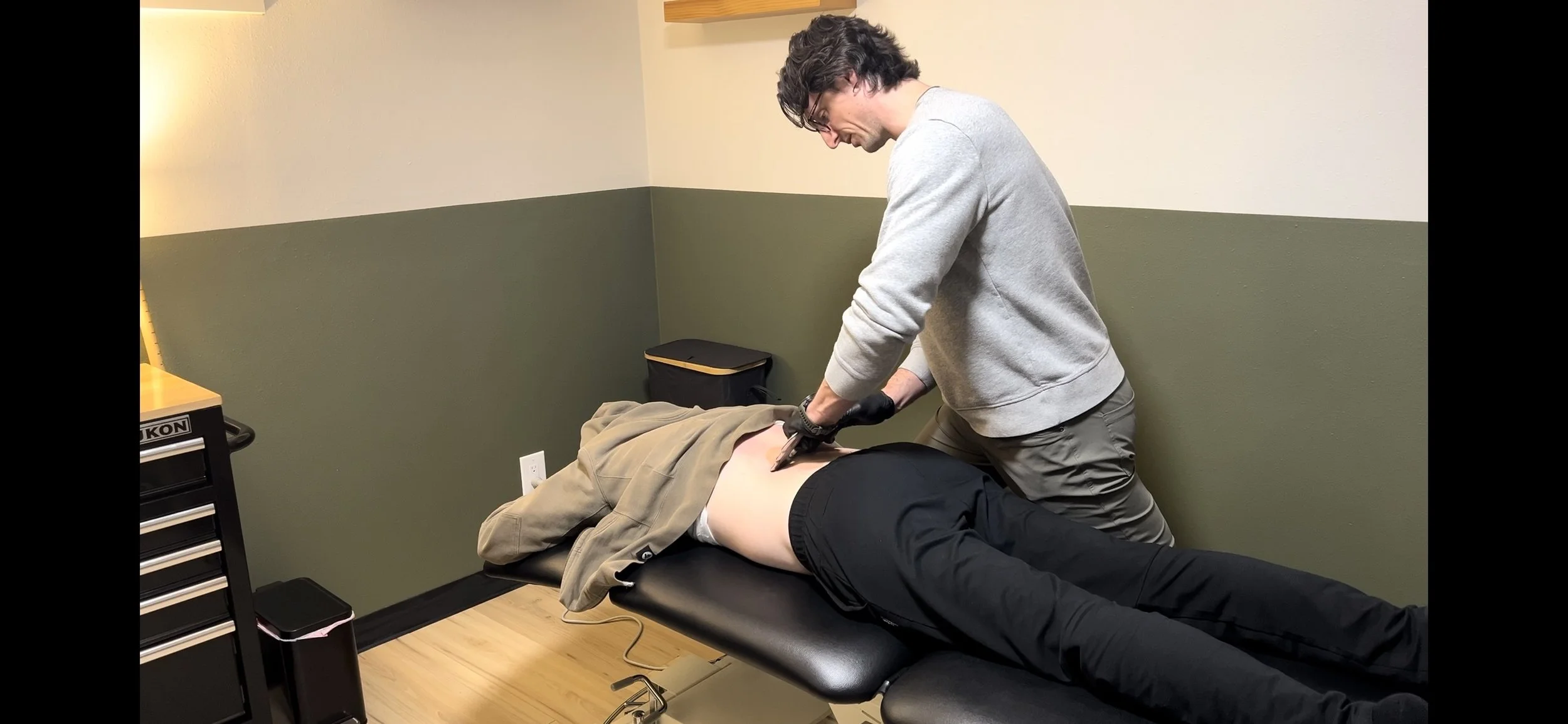
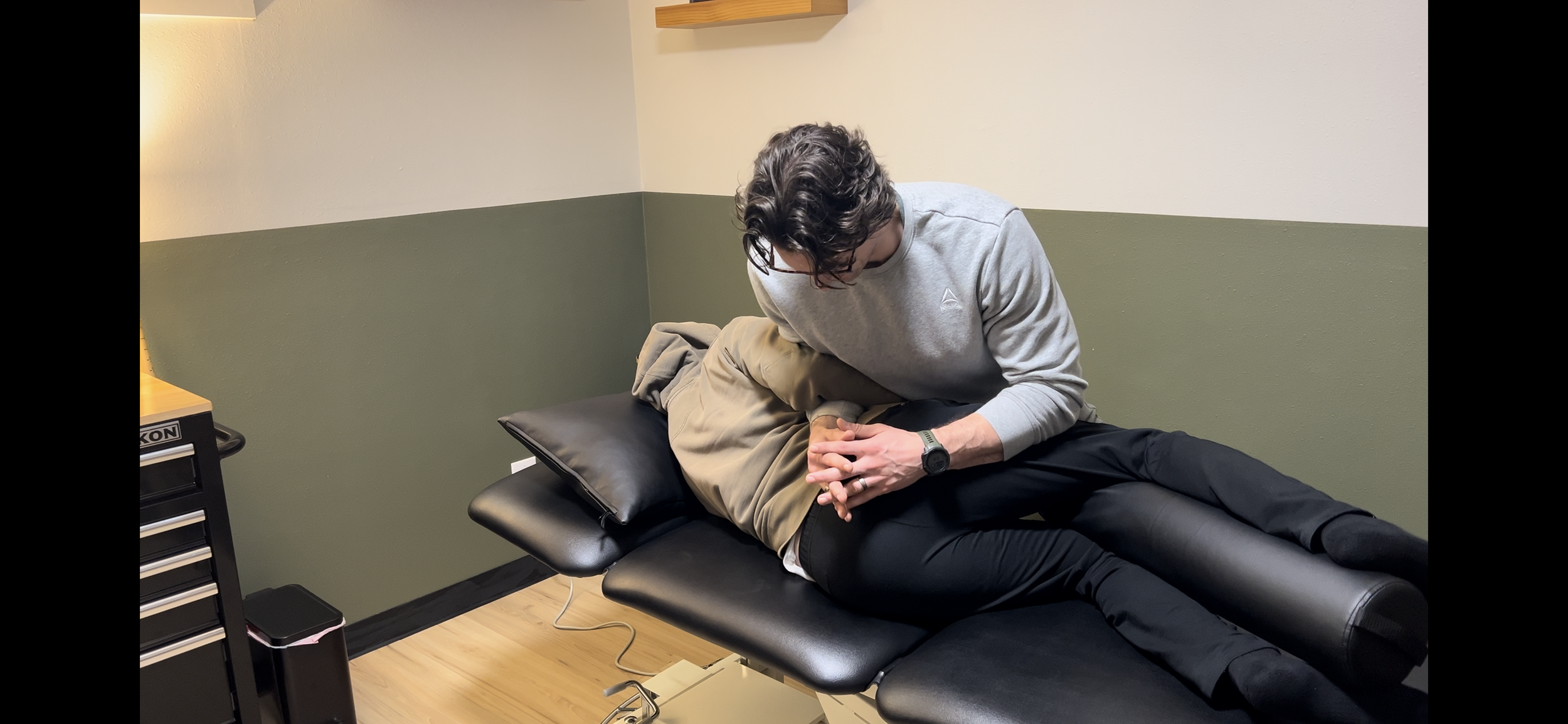
Manual Therapy — hands-on joint and soft tissue work to reduce pain and restore movement
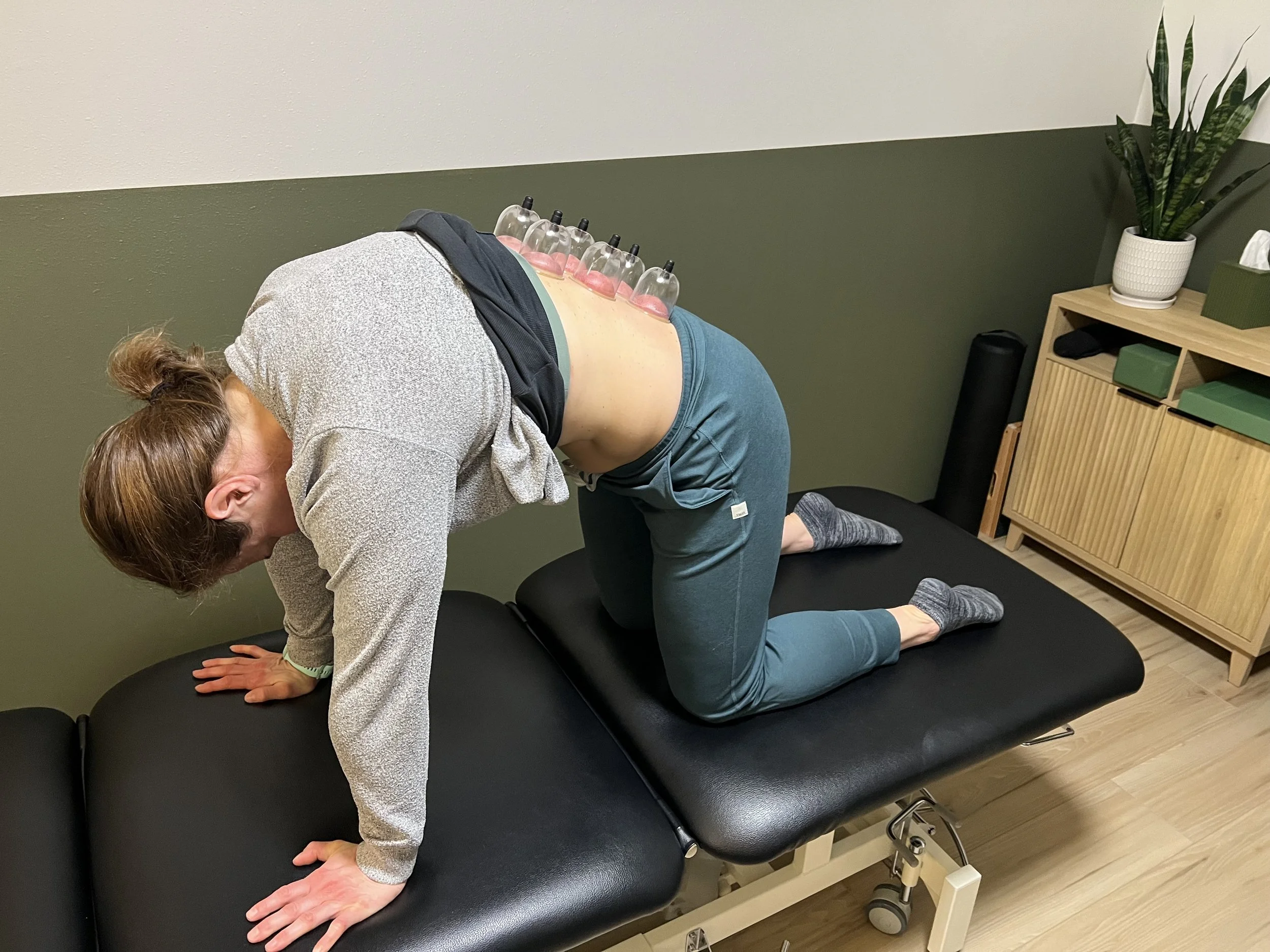
Myofascial Decompression (Cupping) — decompress tight tissue and improve circulation to the affected area
IASTM (Instrument Assisted Soft Tissue Mobilization) — targeted work on muscle and fascial restrictions
Exercise Prescription — specific loading progressions to rebuild the back's capacity
Strength & Movement Assessment — identify the movement patterns that are driving the problem
What to Expect at Your First Appointment
Your first visit starts with a full hour of Ryan's attention — no rushing, no clipboard handoff. You'll walk through your history together: when the pain started, what makes it better or worse, what you were doing before this happened, and what you want to be doing again.
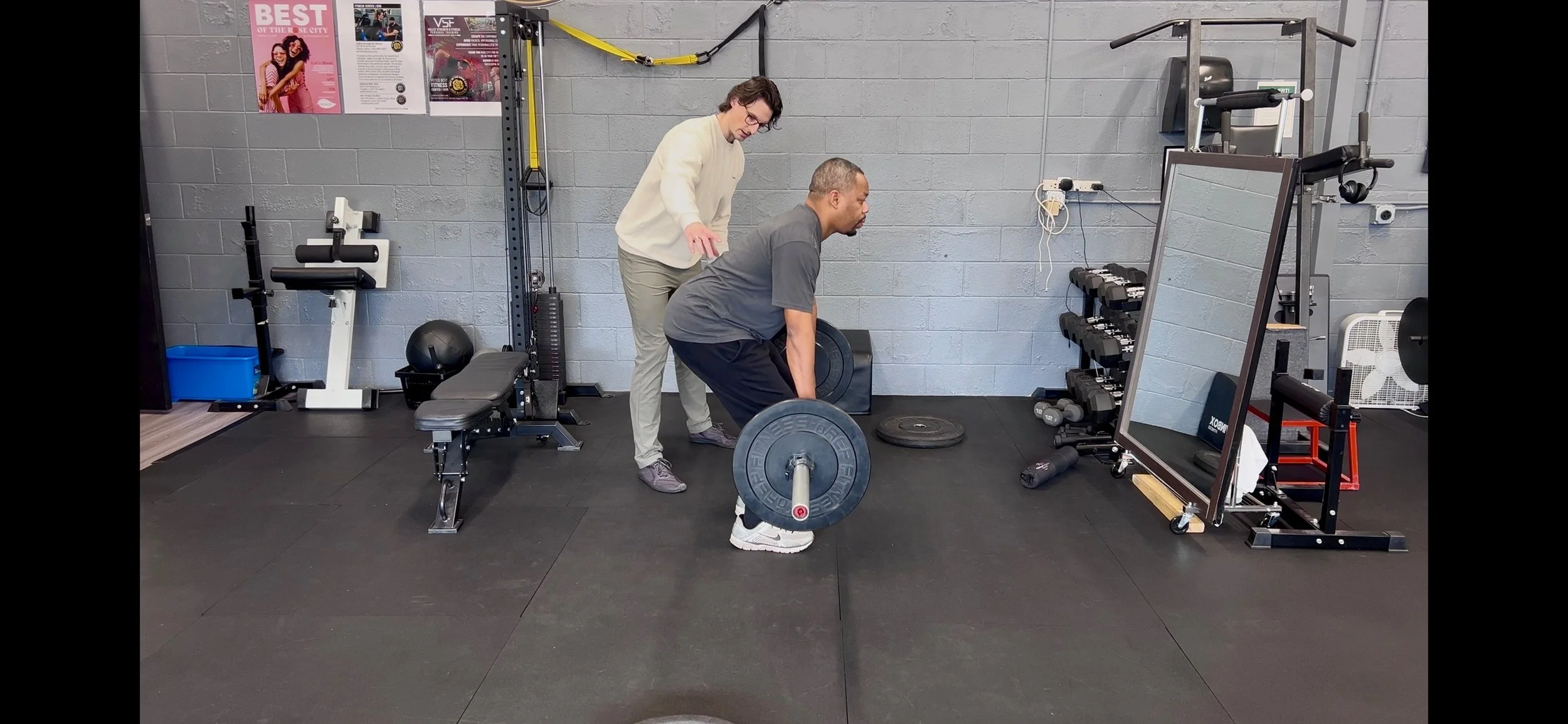
From there, Ryan will run a movement assessment — watching how you squat, hinge, and load — to identify the patterns that need to change. Most patients leave their first appointment with a clear explanation of what's going on and some immediate tools to manage it. No waiting two weeks for a follow-up plan.
Oregon is a direct access state, which means you can book directly — no referral required.
Common Questions About Low Back Pain
Should I rest or keep moving?
In most cases, movement is medicine. Extended bed rest is no longer recommended for low back pain — research consistently shows that staying active (within tolerance) produces better outcomes than rest. That doesn't mean pushing through sharp pain. It means finding the right movement and load for where you are right now, and building from there. That's exactly what we help you figure out.
Do I need an MRI or X-ray first?
Probably not. For the majority of low back pain cases — even significant ones — imaging doesn't change the treatment plan. Current guidelines recommend against routine imaging unless there are specific red flags (like neurological changes, a history of cancer, or trauma). If Ryan identifies a reason to refer you for imaging, he'll tell you directly. Otherwise, a hands-on evaluation gives far more actionable information than a scan.
What if I've had back pain for years?
Chronic low back pain is more complex than acute pain — but it's not a life sentence. People who've been managing back pain for years often haven't had a proper movement assessment that identifies the underlying pattern driving it. If previous treatment hasn't worked, that's information, not a verdict. There's usually a reason it hasn't resolved, and finding that reason is where we start.
What if I got hurt lifting at the gym?
Lifting injuries are one of the most common things we see. Whether it happened under a barbell or during a WOD, the approach is the same: figure out what actually loaded the tissue past its limit, build it back up, and get you pulling again — not just tell you to stop lifting. Our post on CrossFit Injuries: How Physical Therapy Keeps You in the Gym and Out of Pain covers how we think about gym-related injuries and what recovery actually looks like.
Ready to stop managing your back pain and start fixing it? Book directly at HERE — no referral needed in Oregon.