
Elbow and Wrist Pain Treatment in Happy Valley, OR
You didn't think much about your elbow until it started waking you up at night. Or maybe it was the wrist with a nagging ache that shows up every time you grip a barbell, type for too long, or shake someone's hand. Elbow and wrist pain has a way of making itself known in the most ordinary moments, and once it's there, it touches everything.
The frustrating part is that these injuries rarely come from one dramatic moment. They build. A little more volume than usual, a grip-heavy training block, a busy season at work — and suddenly the tissue can't keep up. What starts as mild discomfort becomes something that makes you modify your training, avoid certain movements, or wonder if you're just going to have to live with it.
You don't. This is exactly what physical therapy is built to fix.
What's Driving Your Elbow and Wrist Pain?
The elbow and wrist are closely connected — many of the same muscles cross both joints, which means pain in one area often involves the other. The most common presentations we see:
Lateral epicondylitis (tennis elbow) — pain on the outside of the elbow, typically aggravated by gripping, lifting, or wrist extension. Despite the name, it's just as common in lifters, desk workers, and tradspeople as it is in tennis players. If you play racket sports, [How to Avoid Shoulder Injuries in Pickleball and Tennis] covers how upper extremity load management applies across the whole arm — worth a read alongside your treatment.
Medial epicondylitis (golfer's elbow) — pain on the inside of the elbow, often worse with gripping, pulling movements, or wrist flexion. Common in golfers, climbers, CrossFitters, and anyone doing high volumes of pulling work. If your elbow flared during a training block, [CrossFit Injuries: How Physical Therapy Keeps You in the Gym and Out of Pain] is a useful reference for understanding how these overuse patterns develop and what recovery actually looks like.
Tendinopathy — whether it's at the elbow or wrist, tendon pain follows a predictable pattern: the tissue has been loaded beyond its current capacity, and it's letting you know. The response isn't to rest indefinitely — it's to reduce load temporarily and then rebuild progressively. Tendons need stress to adapt; they just need the right amount.
Wrist pain and overuse strains — common in lifters, cyclists, climbers, and anyone doing repetitive hand and forearm work. Often involves the tendons of the forearm, the wrist extensors, or the small joints of the wrist itself. Frequently shows up when training volume increases faster than the tissue can adapt — something our blog Starting Your New Year Workout Routine: How to Build Momentum Without Breaking Down addresses directly.
De Quervain's tenosynovitis — irritation of the tendons on the thumb side of the wrist, often aggravated by gripping, pinching, or lifting with the thumb out. Common postpartum, but also shows up in lifters and anyone doing repetitive thumb-loaded tasks.
What the Research Says
The evidence on elbow and wrist tendinopathy is clear: progressive loading is the most effective treatment strategy. Starting with isometric exercises — where the muscle contracts without movement — provides immediate pain relief and begins the process of tendon adaptation. From there, a graduated progression through concentric and eccentric loading rebuilds the tissue's capacity to handle real-world demands.
Addressing the full kinetic chain matters too. The forearm muscles don't work in isolation — the shoulder, upper back, and grip all contribute to how load is distributed through the elbow and wrist. Research supports a whole-chain approach rather than treating the painful site alone, which is why elbow and wrist rehab at Timber and Iron always includes an assessment of what's happening upstream.
Passive treatments — bracing, rest, anti-inflammatories — have a role in the short term, but the evidence consistently shows they don't produce lasting results on their own. The tissue needs to be progressively challenged to fully recover.
Timber and Iron's Approach to Elbow and Wrist Pain
Most people with elbow or wrist pain have been told to rest, ice, and take something for it. Some have been fitted for a brace. Few have had someone look at how they're actually loading the tissue — what movements are driving the problem and what a real rebuilding program looks like.
At Timber and Iron, every appointment is 60 minutes, one-on-one with Dr. Ryan Eckert. Ryan will assess not just the elbow or wrist but the full upper extremity — how the shoulder moves, how load is distributed through the forearm, how your grip is functioning. That complete picture is what allows treatment to address the source of the problem, not just the location of the pain.
The short-term goal is reducing pain and irritability so you can move without guarding. The longer-term goal is rebuilding the strength and tissue capacity that lets you grip, lift, throw, and type without the constant background worry that it's going to flare again.
Treatment we use for elbow and wrist pain:
Manual Therapy — hands-on joint mobilization for the elbow and wrist to restore motion and reduce pain
IASTM (Instrument Assisted Soft Tissue Mobilization) — targeted work on tendon and fascial restrictions in the forearm and elbow
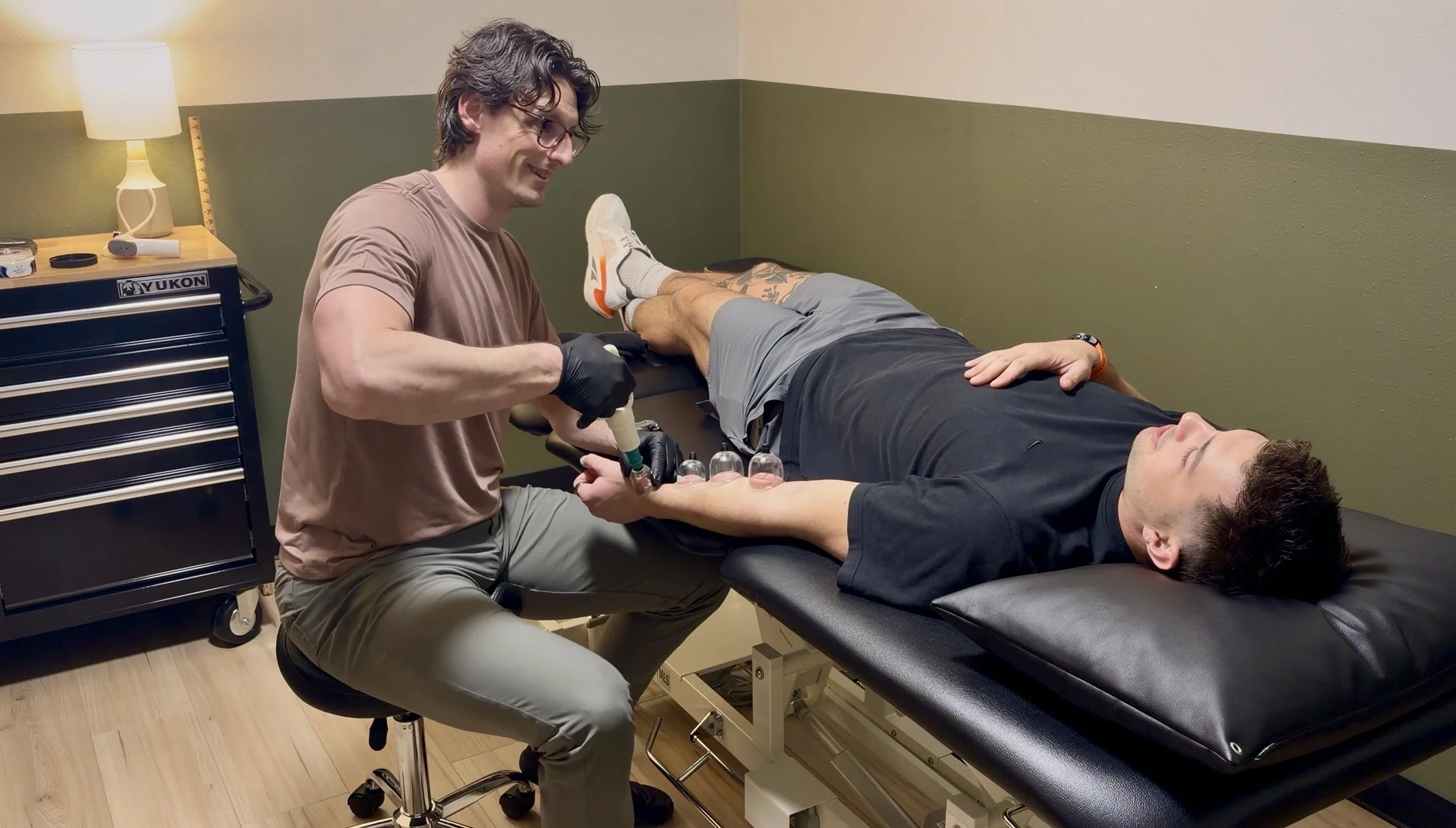
Myofascial Decompression (Cupping) — decompress tight tissue and improve circulation to chronically loaded areas
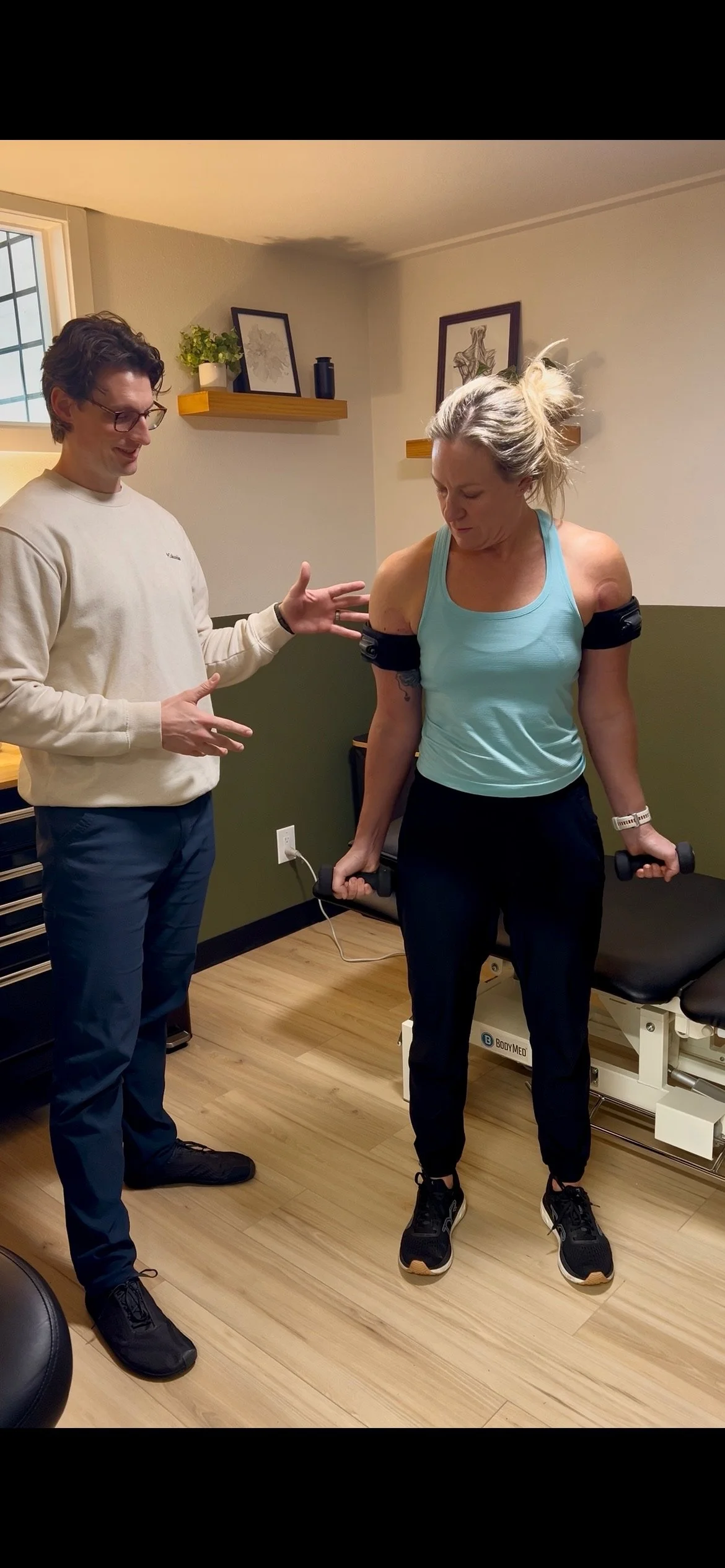
Blood Flow Restriction Training (BFR) — allows effective muscle and tendon loading at lower resistance levels, particularly useful when full loading is too irritating early in rehab
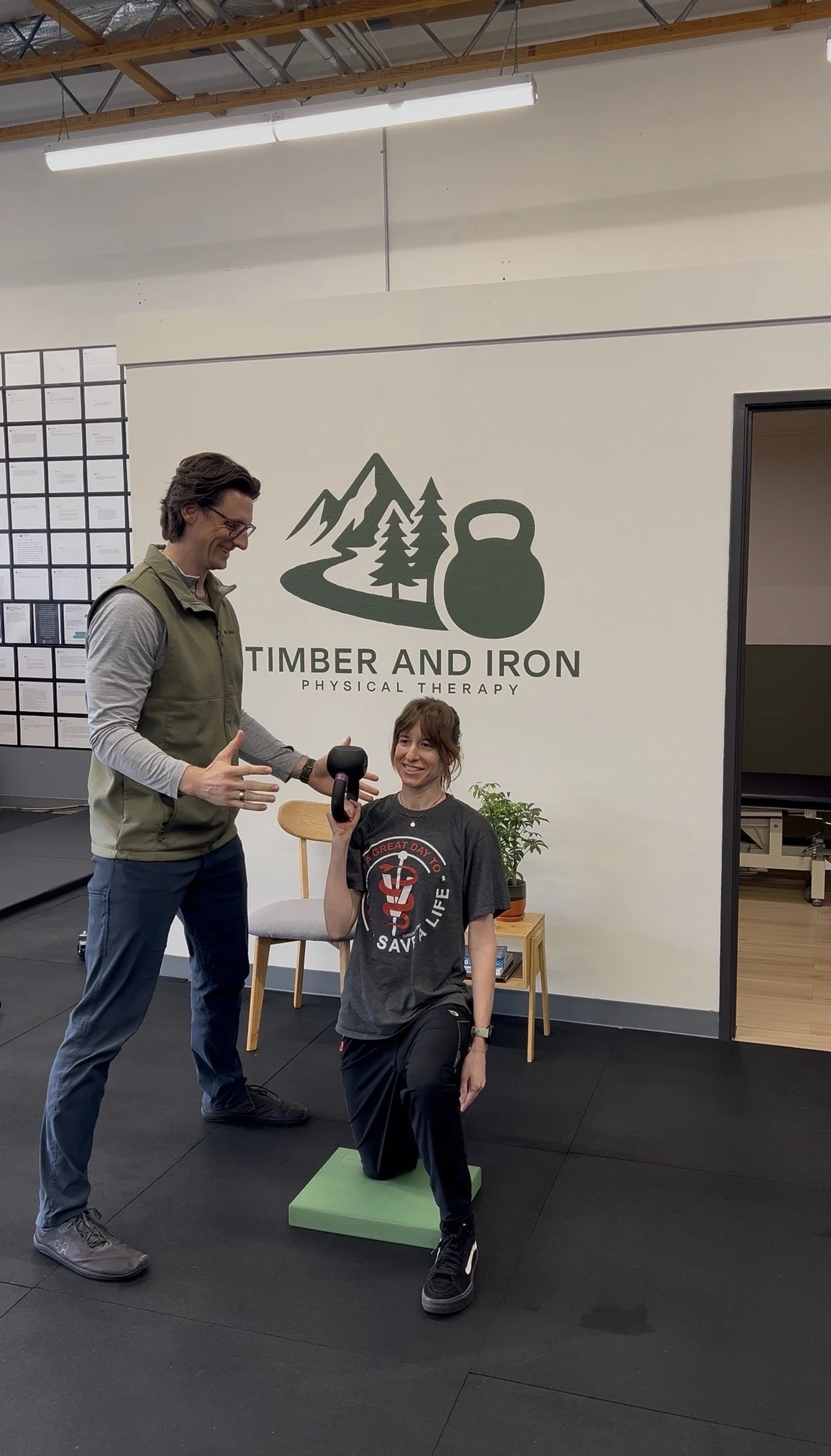
Exercise Prescription — progressive isometric to eccentric loading programs for the wrist, forearm, and elbow, built around what you're actually trying to get back to
Strength & Movement Assessment — identify the upstream contributors — shoulder, upper back, grip — that are driving load into the elbow and wrist
What to Expect at Your First Appointment
Your first visit is a full hour with Ryan. You'll walk through your history together — when the pain started, what aggravates it, what you've already tried, and what you need to be able to do again. From there, Ryan will assess your elbow and wrist mobility, your grip strength, and how your shoulder and upper back are functioning in relation to the problem.
Most patients leave the first appointment with a clear explanation of what's driving their pain and a set of immediate tools to start managing it — not a referral for imaging and a two-week wait. The goal is to get you moving in the right direction from day one.
Oregon is a direct access state — no referral needed to get started.
Common Questions About Elbow and Wrist Pain
I've been dealing with tennis elbow for months. Why hasn't it gotten better on its own?
Tendon pain that doesn't resolve with rest usually means the tissue hasn't been progressively loaded to rebuild its capacity. Rest reduces irritability, but the tendon needs graduated stress to fully adapt. If you've been resting and it keeps coming back when you return to activity, that's the missing piece.
Can I keep training while I'm being treated?
In most cases, yes — with modifications. Part of the treatment process is identifying what you can keep doing while the tissue recovers, rather than shutting everything down. Removing all load is rarely the right answer for tendon conditions.
My elbow hurts but my wrist seems fine. Do I need to have both assessed?
Yes — the muscles and tendons crossing the elbow originate in the forearm and connect down to the wrist. Even if your wrist isn't painful, how it moves and how load is distributed through the forearm is directly relevant to what's happening at the elbow.
Do I need imaging before coming in?
Not for most presentations. A hands-on evaluation gives more actionable information than an MRI or X-ray for the majority of elbow and wrist conditions. If Ryan identifies a clinical reason to refer you for imaging, he'll tell you directly.
Do I need a referral?
No. Oregon is a direct access state — you can book at Timber and Iron without a physician referral.
Done letting elbow pain dictate what you can lift, grip, or do? Book directly at timberandironpt.com — no referral needed in Oregon.
This content is for educational purposes only and does not constitute medical advice. For guidance specific to your situation, schedule a consultation with Dr. Ryan Eckert at Timber and Iron Physical Therapy.