
Running Analysis & Injury Prevention in Happy Valley, OR
Most running injuries don't come out of nowhere. They build quietly, one stride at a time, until something that was manageable becomes something that forces you off the road. A 2021 systematic review published in the Journal of Sport and Health Science found that running-related injury rates average around 40% across recreational runners — and that number climbs significantly for those ramping up mileage or training for an event.
The frustrating part is that most of those injuries are preventable. Gait mechanics, strength imbalances, and training load are all modifiable. You just need to know what you're working with.
A Running Analysis at Timber and Iron Physical Therapy gives you that information. Whether you're dealing with a current injury, trying to stay ahead of one, or looking to run more efficiently, your physical therapist will break down your stride, identify what's contributing to pain or inefficiency, and give you a clear plan to move forward.
Why Running Mechanics Matter More Than Most Runners Realize
Running looks simple. It's not. Every stride involves a complex interaction between your foot strike, ankle stiffness, hip drive, trunk position, and arm swing. When one piece of that chain isn't working well, the surrounding structures compensate. Those compensations are usually invisible until they become painful.
Knee pain is the most commonly reported running injury, accounting for nearly a third of all running-related complaints. Patellofemoral pain, IT band syndrome, and patellar tendinopathy are all closely tied to how load is distributed through the lower extremity during the running stride. Our knee pain treatment page covers what those presentations look like and how they're addressed.
Shin splints and Achilles tendinopathy are among the top five most common running injuries by incidence, both driven heavily by training load and the way force travels through the lower leg. Hip strength deficits, cadence, and foot strike pattern all contribute. Understanding your mechanics before those injuries develop — or while they're still manageable — changes the outcome significantly.
Running form also directly affects performance. Inefficient mechanics mean more energy spent moving in directions that don't propel you forward. Small improvements in stride rate, hip extension, and trunk control translate into real gains in pace and endurance over longer distances.
What a Running Analysis at Timber and Iron Includes
Your session is 60 minutes, one on one with your physical therapist. It starts with a conversation about your goals, training history, and any current or past injuries before anything else happens.
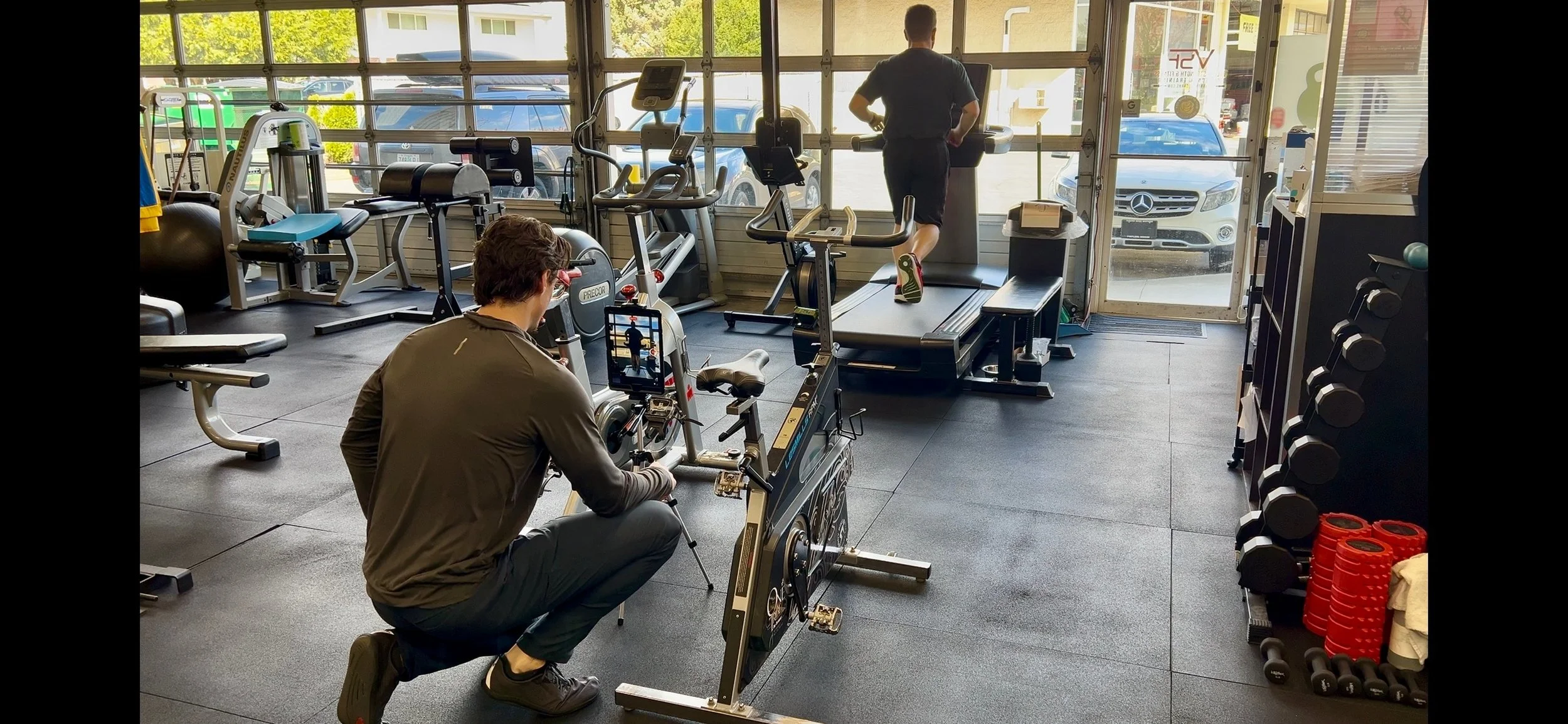
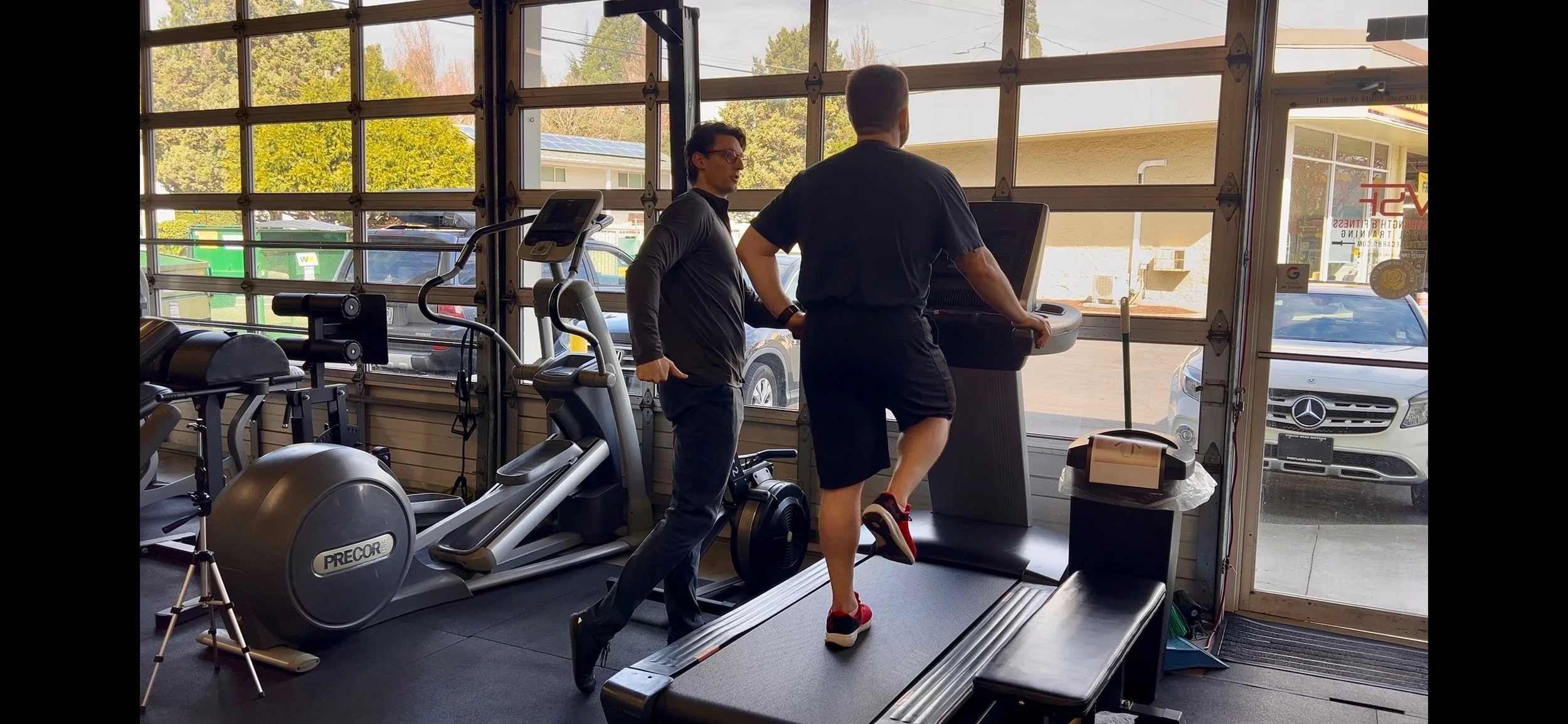
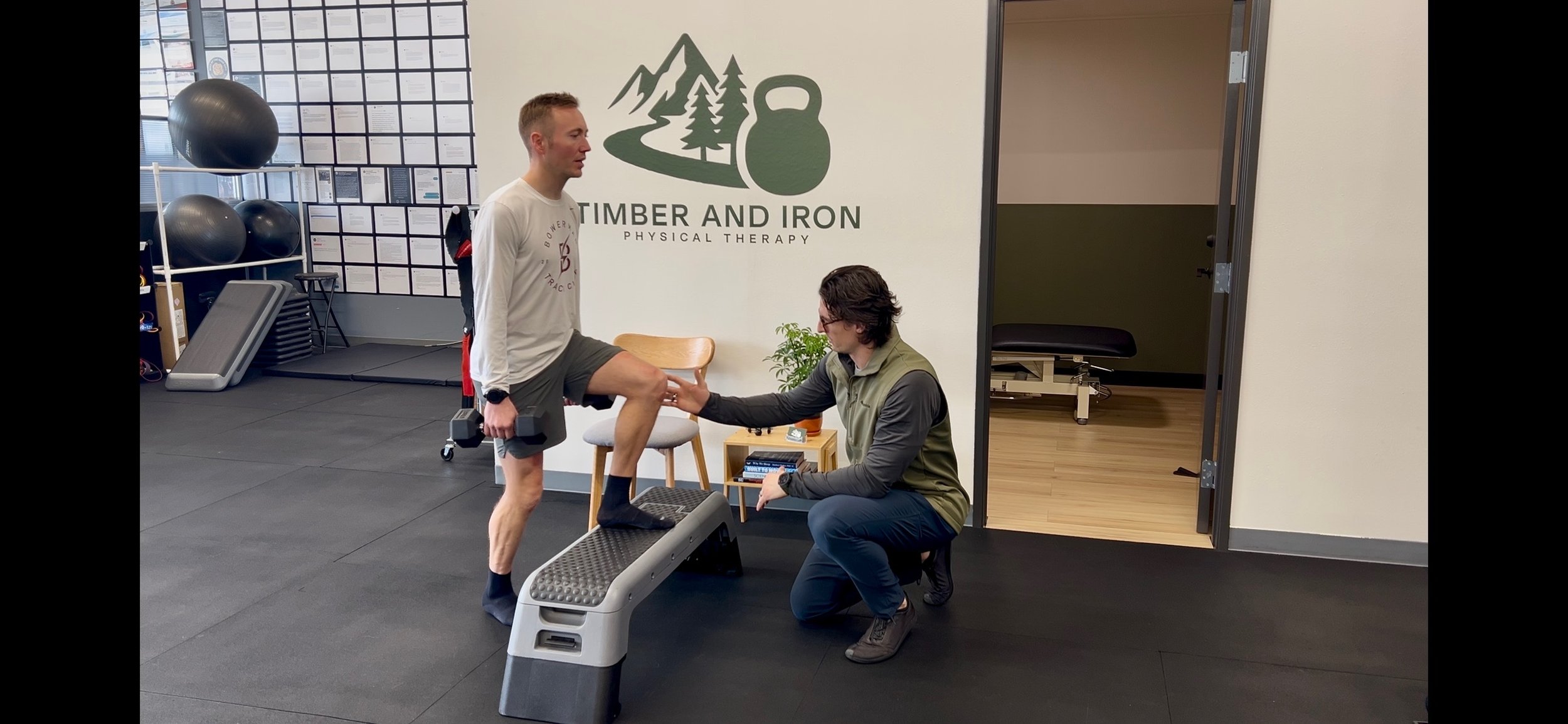
From there, your physical therapist will assess your strength and mobility off the treadmill — hips, knees, ankles, and core — because what your body can do off the bike determines what it does on it. Then comes the video gait analysis, where your running mechanics are captured and reviewed in detail. Your physical therapist will walk you through what they're seeing and connect it directly to your symptoms or performance goals.
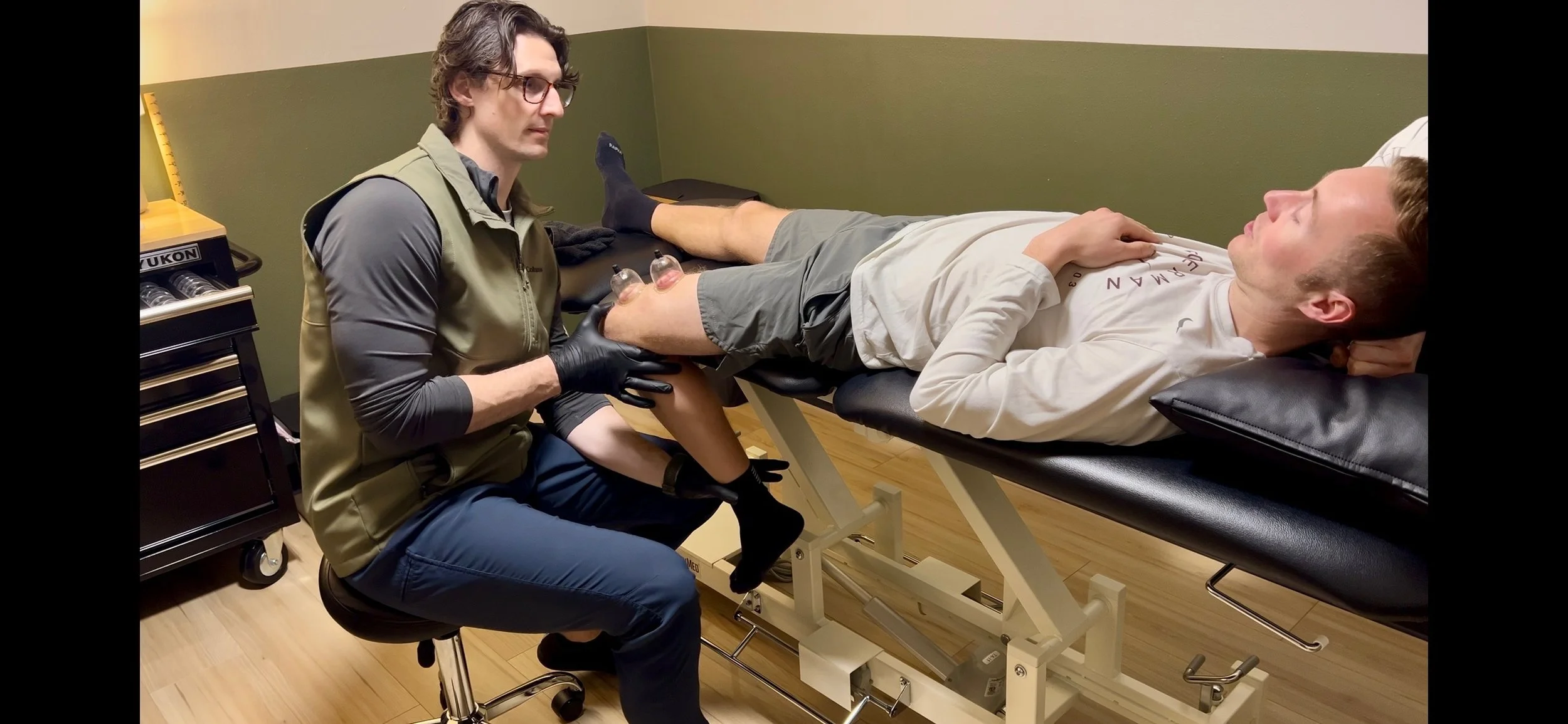
You'll leave with specific exercises and movement cues to work on at home, along with recommendations for technique adjustments and, where relevant, changes to footwear or training load. Depending on what's found and how the session goes, there may also be time for hands-on treatment like myofascial decompression. If more treatment time makes sense, your physical therapist will recommend a follow-up.
Who Benefits from a Running Analysis
Runners dealing with recurring pain that keeps coming back despite rest. Runners preparing for a race who want to make sure their mechanics will hold up as mileage increases. New runners who want to build a solid foundation from the start rather than learn through injury. Experienced runners who feel like they're leaving performance on the table and want to understand why.
Some of the most useful sessions are with runners who feel fine right now. Identifying a loading pattern or movement limitation before it becomes a problem is significantly easier than addressing it after an injury has set in.
What the Research Says About Running Injury Prevention
Strength training is one of the most well-supported interventions for reducing running injury risk. Research consistently shows that hip abductor and external rotator strength deficits are associated with knee pain, IT band syndrome, and stress fractures in runners. Addressing those deficits through targeted exercise reduces injury incidence and improves running economy.
Cadence modification — specifically increasing step rate — has been shown to reduce loading at the knee and hip, making it one of the most accessible mechanical adjustments a runner can make. Gait retraining studies have demonstrated meaningful reductions in patellofemoral pain and tibial stress through relatively simple cue-based interventions.
The evidence is clear that running injuries are not just a matter of bad luck or high mileage. They're largely predictable and largely preventable when you understand the mechanics driving them.
For more on how to build durability as a runner, our blog covers 5 key strength exercises every runner needs, how to answer the question of whether to train through pain, and how to build training momentum without breaking down.
Common Questions About Running Analysis
What happens during a running analysis session?
Your session is 60 minutes with your physical therapist. It includes a movement assessment off the treadmill, video analysis of your running gait, and a review of what's driving any pain, inefficiency, or injury risk in your mechanics. You'll leave with specific exercises and movement cues to work on at home, and depending on what's found, there may be time for hands-on treatment like myofascial decompression as well.
Do I need to be injured to get a running analysis?
No. Some of the most useful sessions are with runners who feel fine but want to stay that way. A gait analysis can identify loading patterns and movement habits that don't cause pain yet but will over time, especially as mileage increases.
What should I bring to my running analysis appointment?
Bring your running shoes and wear what you'd normally run in. If you've been dealing with a specific issue, it helps to have a sense of when it started and what makes it better or worse. No referral is needed to book in Oregon.
How is a PT-led running analysis different from a treadmill assessment at a running store?
A running store assessment is focused on matching you to the right shoe. A PT-led analysis looks at the whole picture — your strength, mobility, movement patterns, and injury history — and connects what's happening in your gait to what's happening in your body. The recommendations go beyond footwear.
Will I get treatment during my running analysis?
The focus of the session is the assessment and your home program, but there is sometimes time for hands-on work like cupping or soft tissue treatment depending on what's found. If more treatment time is needed, your physical therapist will recommend a follow-up appointment.
This content is for educational purposes only and does not constitute medical advice. For guidance specific to your situation, schedule a consultation with a physical therapist at Timber and Iron Physical Therapy.