
Should You Train Through Pain? A Physical Therapist's Honest Answer
Most athletes have two default responses when something hurts: push through it, or stop everything. In my experience treating active adults in Happy Valley, both get people into trouble.
Pain during training exists on a spectrum. Where something falls on that spectrum determines whether you should modify, monitor, or stop loading it entirely. I use a simple green/yellow/red framework with every patient — and one hard rule about when self-managing stops being a good idea.
Both of those are in here.
What "Training Through Pain" Actually Means
Pain during exercise isn't automatically a sign of injury.
Muscle soreness 24–72 hours after a hard session is normal — it's tissue remodeling, not damage. Joint pain that arrives mid-workout and doesn't resolve is a different story. So is pain that changes your mechanics, wakes you up at night, or has been there for more than two weeks without clearly improving.
The simplest way to think about it: green, yellow, red.
Green is 0–3 out of 10, resolves quickly after training, not affecting how you move. Usually fine to train through with attention.
Yellow is 4–6 out of 10, lingers after the session, starting to affect your form or your willingness to load a movement. Modify. Don't push.
Red is sharp, sudden, or 7+ out of 10 — or anything neurological like tingling or numbness. Stop. Get it assessed.
Athletic identity is what makes yellow feel like green.
Why Active Adults Get This Wrong
If your identity is built around showing up — a 5am lifting crew, a marathon training block, a CrossFit class you've been going to for three years — rest feels like failure. That's how driven people are wired.
But that same drive makes people unreliable self-assessors when they're the ones who are hurting.
Pain is a protective signal, not a direct readout of tissue damage. Your nervous system can amplify it when it perceives threat, and suppress it when you're in competition mode. Neither response is accurate information about what's actually happening in your shoulder or your knee.
The other mistake is swinging too far the other way. Complete rest isn't a treatment plan. For most overuse injuries, stopping entirely allows strength and capacity to decline without fixing the underlying mechanical problem. Graded loading beats rest for most musculoskeletal conditions. The goal is a training week that moves your capacity forward.
The Two-Week Rule
This is the threshold I give everyone.
If you've had pain during training for two weeks and it hasn't clearly, consistently improved — not just a good day here or there, but a clear downward trend — your body isn't solving this on its own. That's not a reason to panic. It's just a reason to stop waiting.
Most people I see waited 4–6 weeks before coming in. By that point, what could have been a 4-week fix is now 8 weeks. The window where these things resolve quickly is early.
Before that two-week mark, here's what you can do on your own:
Rate it honestly. Where is it on the 0–10 scale at its worst?
Test the movement. Does a bodyweight version of the painful movement reproduce it? If so, adding load isn't the answer today.
Check the trend. Better, worse, or the same as last week? Direction tells you more than the number does.
Modify, don't quit. Knee pain might still allow biking. Shoulder pain might allow lower-body work. The question isn't always "can I train?" — it's "what version of training is still productive right now?"
For more on managing load when you're trying to stay active through an injury, see our Running Injuries page or our post on Crossfit injuries.
When to Come In
Beyond two weeks, get seen immediately if you have any of these:
Pain that radiates down an arm or leg
Numbness or tingling
Swelling that appeared quickly after a specific incident
Pain severe enough to change how you walk or move
Oregon is a direct access state — you can book a physical therapyevaluation without a physician referral. If you've been waiting because you thought you needed a doctor's note first, you don't.
What We Do at Timber and Iron
The first thing a PT evaluation tells you is what's actually driving the problem.
Knee pain is usually not a knee problem. It's often a hip control issue or a loading pattern that's been compensating for months. Shoulder pain is the same story. For most active adults in Happy Valley and the surrounding Clackamas County area, training-related pain comes down to load management and movement patterns, not something broken on imaging.
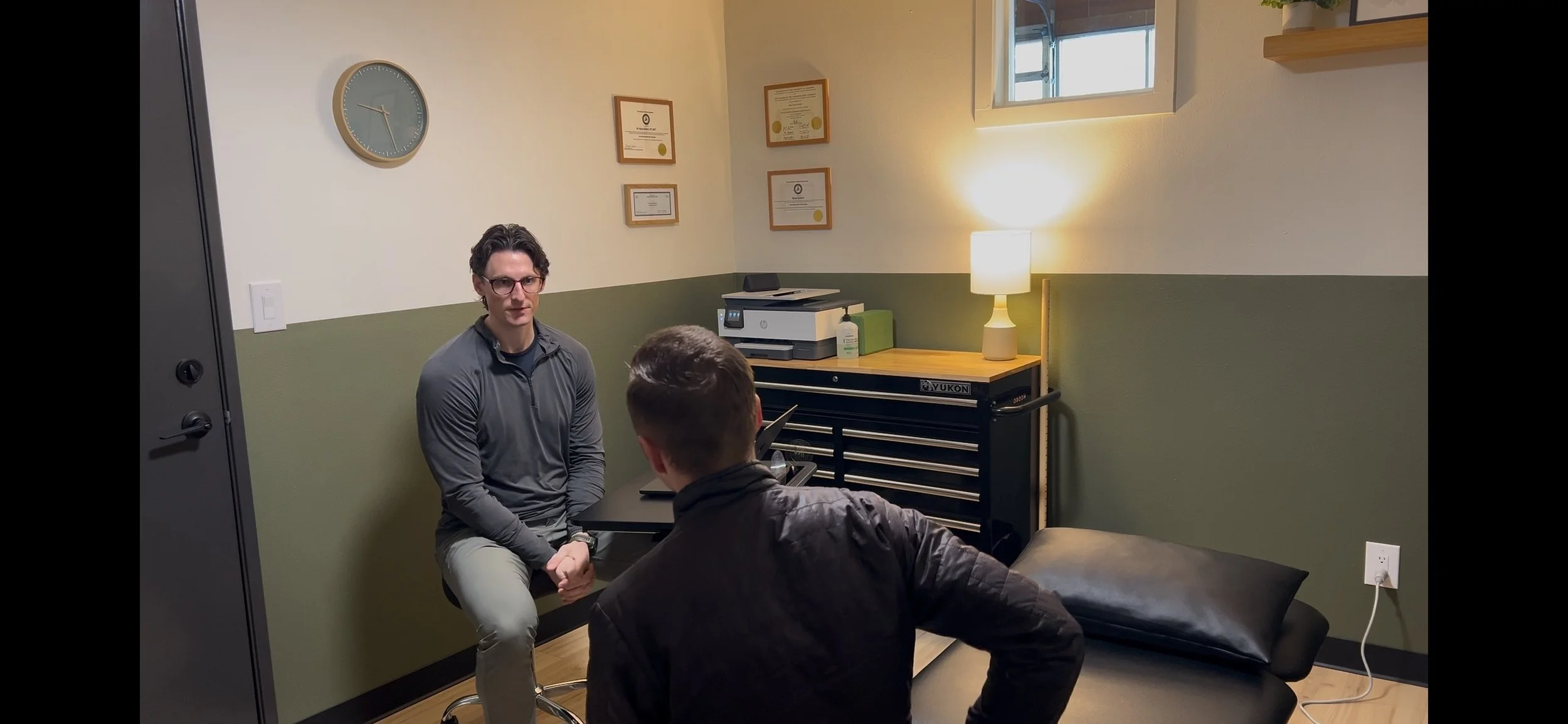
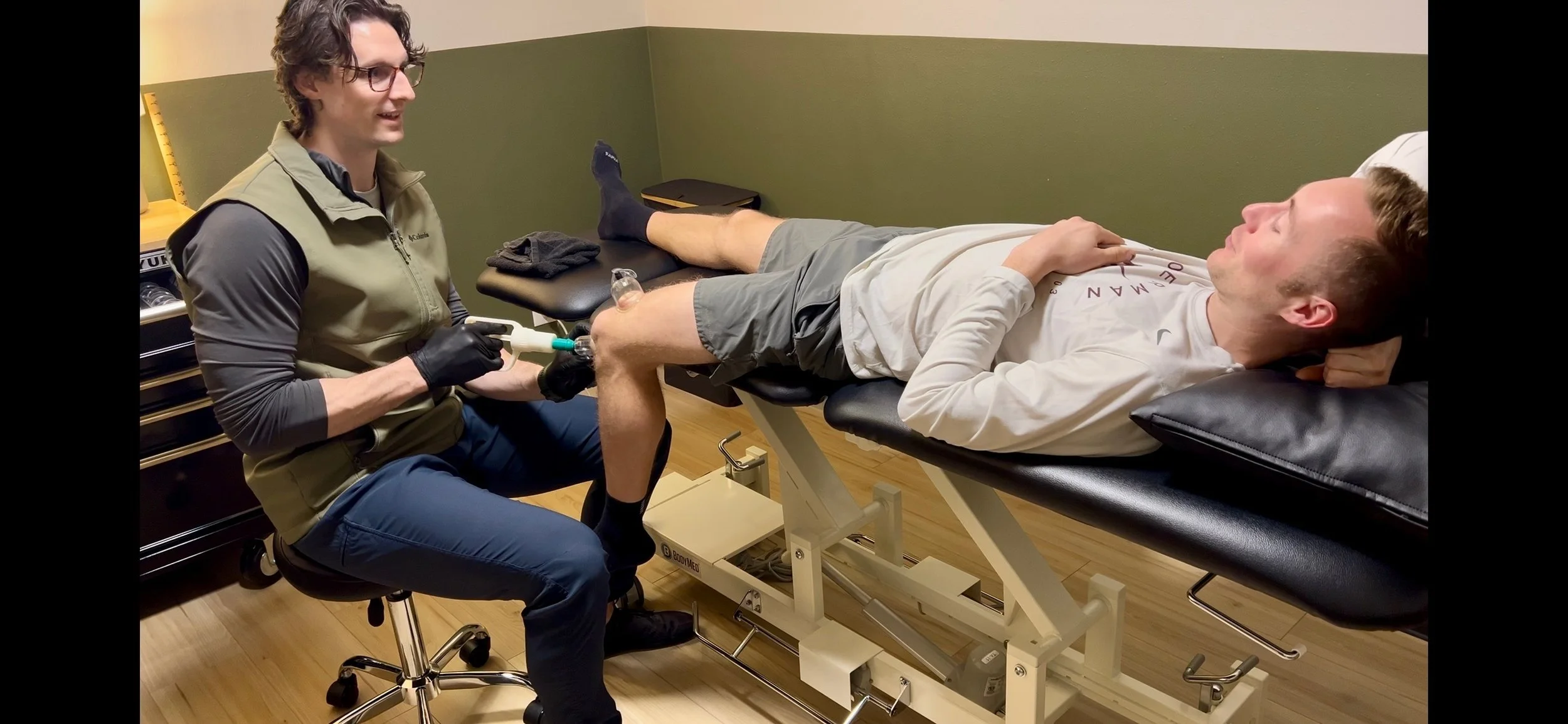
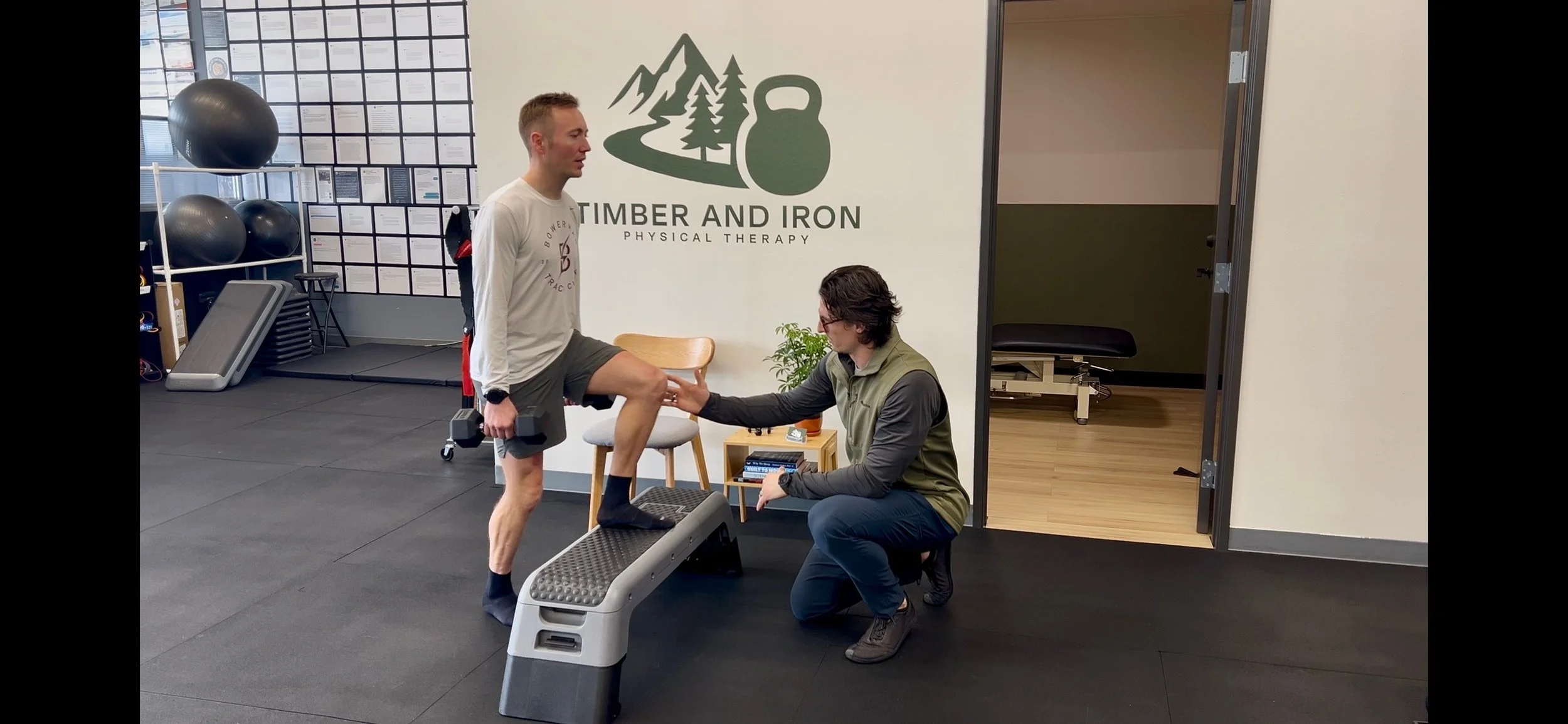
At Timber and Iron, every session is one hour, one-on-one with Dr. Ryan Eckert, PT, DPT. The eval is thorough, the treatment is specific to your body and your sport, and the goal isn't just to get you out of pain. It's to make you more durable than you were before.
FAQ
Is soreness the same as an injury?
No. Delayed onset muscle soreness peaks 24–72 hours after training and resolves on its own. Injury pain is typically more localized, more specific to a movement, and doesn't follow that pattern.
Can I keep lifting if something hurts?
Depends on where it falls on the scale. Green — probably yes with modifications. Yellow — modify significantly. Red — stop and get it assessed.
What if I'm in the middle of a training cycle?
That question needs an answer based on your body, not a general protocol — and that means someone actually watching you move.
If any of this sounds familiar, that's a good reason to come in. Book an eval at Timber and Iron — one hour with Ryan will tell you more than another two weeks of guessing.
This content is for educational purposes only and does not constitute medical advice. For guidance specific to your situation, schedule a consultation with Dr. Ryan Eckert at Timber and Iron Physical Therapy.