
The Role of Physical Therapy in Avoiding Surgery
Can Physical Therapy Help You Avoid Surgery? Here's What the Research Says
You've got an MRI in hand, a referral to a surgeon, and a nagging question: do I actually need this?
A structural finding on imaging that sounds serious, a doctor who says surgery might be the answer, and a decision that feels bigger than you're prepared for. Before you schedule that consultation, there's something worth knowing: for a significant number of musculoskeletal conditions, physical therapy produces outcomes that match surgery. Not "almost as good" but equivalent. With fewer complications, faster initial recovery, and no going under the knife.
That's what the research shows.
This post covers which conditions respond best to conservative care, what the evidence actually says, and how to make a smarter decision before committing to something irreversible. If you've been told surgery might be in your future, this is worth reading first.
What "Avoiding Surgery" Actually Means
Let's be clear: surgery saves lives, restores function, and is genuinely the right call for certain conditions. A complete ACL rupture in a competitive athlete. A spinal surgery after a rapid loss of function in your legs or arms. A fracture that won't heal on its own. These aren't situations where you push back.
But that's not what most people are being referred for.
Most adults who land in a surgeon's office are there because of degenerative changes: osteoarthritis, partial rotator cuff tears, degenerative meniscal tears, or disc bulges. These findings show up on imaging. They sound alarming. And they're also present in people who have zero pain.
A landmark study published in the American Journal of Roentgenology found that in adults over 60 with no knee pain whatsoever, more than 40% showed signs of meniscal damage on MRI. Another study found disc bulges or herniations in over half of pain-free adults over 40. Your imaging doesn't tell the story you think it does.
Nobody's suggesting you refuse care. The question is whether you've exhausted the option that, for your specific condition, gets the same result without anesthesia.
Why Surgery Gets Recommended Before PT
There are a few reasons people end up in a surgical consultation before they've ever set foot in a PT clinic.
Imaging tells a structural story. When a scan shows a torn rotator cuff or a compressed disc, surgery looks like the logical fix. The problem is that structure and function don't always track together. Many people with torn rotator cuffs regain full, pain-free function without surgery. The tissue doesn't have to be perfectly repaired to work.
The referral path is well-worn. Orthopedic surgeons are experts at surgery. That's what they're trained for and what they do best. It's not malicious; it's a match between what a specialist offers and what they're seeing in the patient in front of them. But it means you may not hear "try six weeks of PT first" unless you ask.
Pain creates urgency. When something hurts badly enough, people want the most decisive-sounding solution. Surgery feels like it solves the problem. PT feels like it delays solving the problem. That framing gets the causality backwards.
What the Evidence Actually Shows
A few studies worth knowing before your next appointment:
Knee and meniscus: The NEJM METEOR trial compared arthroscopic partial meniscectomy to PT alone for degenerative meniscal tears and found no meaningful difference in outcomes at one year. The people who did PT skipped the operating room and ended up in the same place.
Spinal stenosis: A randomized controlled trial on lumbar spinal stenosis found no significant difference in physical function between the surgery group and the PT group at two-year follow-up. A 2022 JAMA review confirms PT is the recommended first-line treatment, with surgery reserved for patients who don't improve with conservative care.
Rotator cuff: The American Academy of Orthopaedic Surgeons cites conservative care as effective for 50-80% of partial rotator cuff tears. Most people with partial tears don't need surgical repair to get their shoulder back.
The prehab finding: Even in cases where surgery does become necessary, patients who complete a course of PT beforehand have measurably better post-surgical outcomes. This isn't an argument against surgery. It's evidence that PT matters at every stage.
What You Can Do Before Making the Decision
You don't need a referral to see a PT in Oregon. That means you can get a professional assessment before surgery is on the table, not after.
Book an evaluation first. An experienced PT will tell you whether your condition is likely to respond to conservative care, roughly how long that would take, and what it would look like week to week. Actual information to make a decision with.
Ask your doctor directly: "What happens if we try six to eight weeks of PT first?" Most surgeons will support it. If yours won't engage with the question, that's worth knowing too.
While you're waiting for that appointment, start tracking what makes your symptoms better or worse, specific movements, positions, activities. That pattern is what a PT uses to figure out what's actually driving your pain, as opposed to what showed up on the scan.
When Surgery Really Is the Right Call
PT isn't the answer for everything. There are situations where surgery shouldn't wait, and a good PT will tell you which one you're in.
Red flags that warrant prompt surgical consultation:
Progressive neurological symptoms: foot drop, loss of bowel or bladder control, rapidly spreading numbness or weakness
A complete tendon or ligament rupture with significant functional loss in an active person
A fracture that won't heal conservatively
Signs of infection or tumor, rare but worth ruling out
An honest PT assessment doesn't minimize these. It makes them easier to catch because you're in front of someone who has time to evaluate you properly.
How PT Treats the Conditions That Often Lead to Surgery
At Timber and Iron in Happy Valley, the approach isn't stretching and a heat pack. A session is an hour, one on one, with a focused clinical assessment and a specific treatment plan.
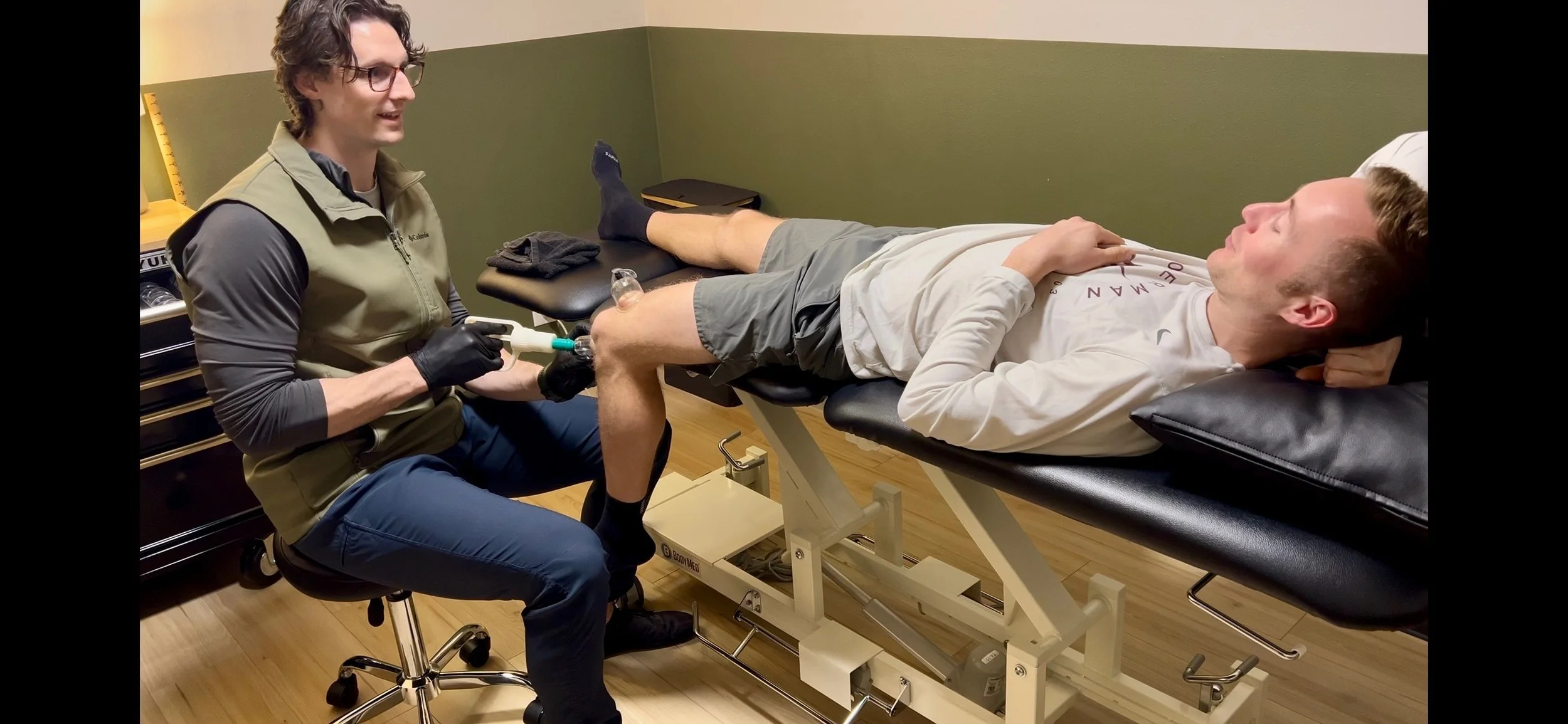
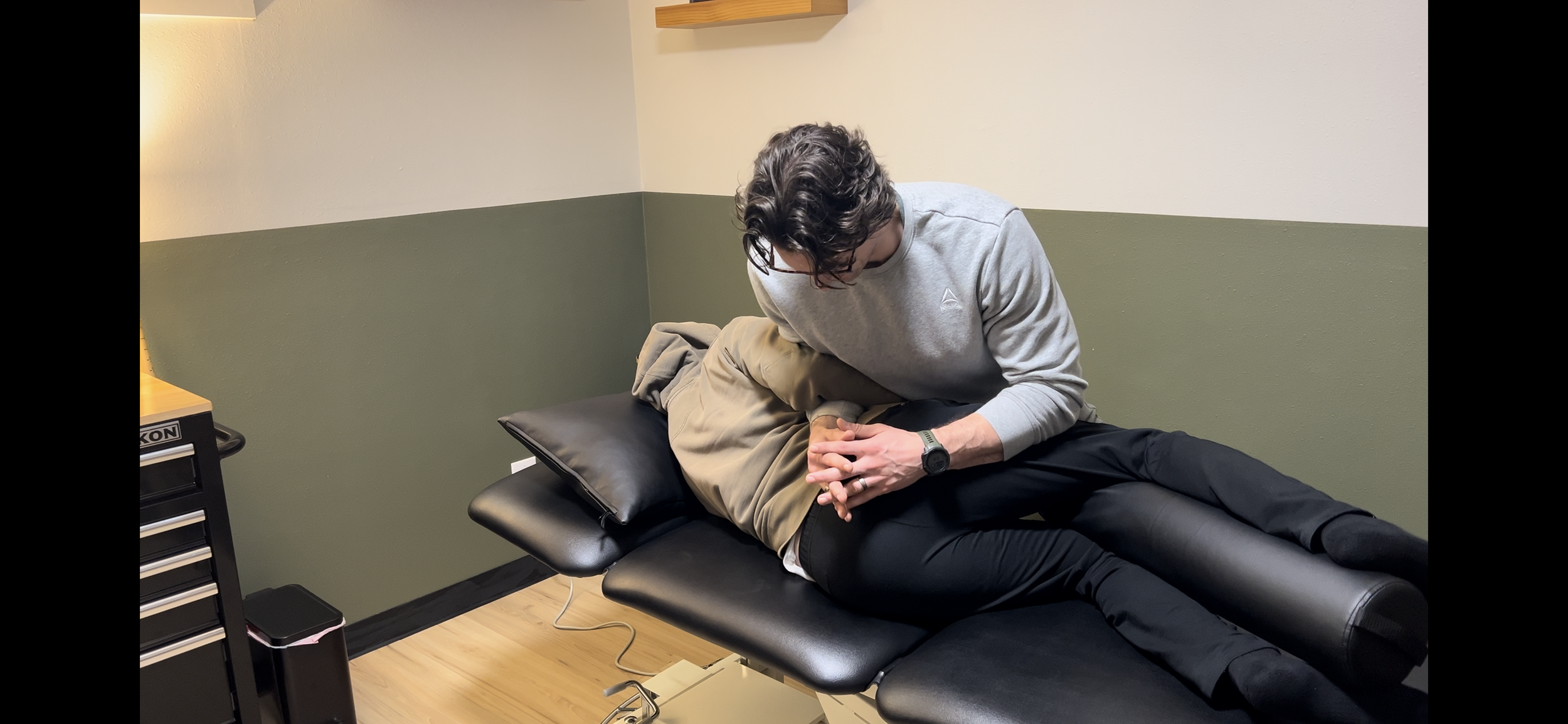
For conditions that often get routed toward surgery, that typically includes manual therapy to restore joint mobility and reduce pain (IASTM and myofascial decompression where appropriate), targeted strength work addressing the actual weak links, load management to keep you moving while tissue adapts, gait and movement analysis for lower extremity issues, and honest education about what your imaging actually means.
The goal is a specific endpoint: enough strength and function that you're not managing a chronic condition. You get there, you're done.
FAQ
Will insurance cover PT before surgery?
Most insurance plans, including First Choice Health, Regence BCBS, and MODA , which we accept, cover PT for musculoskeletal conditions. Oregon is a direct access state, so you can self-refer for an initial evaluation. Check your specific benefits, but PT is typically a covered service.
How many PT sessions does it take to know if this will work?
That depends on the condition, but most people have a clear sense of whether they're making progress within four to six sessions. A credible PT won't promise outcomes they can't guarantee, but they also won't keep you in the dark about where things stand.
What conditions respond best to PT instead of surgery?
Degenerative meniscal tears, lumbar disc herniation with radiculopathy, lumbar spinal stenosis, partial rotator cuff tears, knee osteoarthritis, and shoulder impingement all have strong evidence for conservative care. These are also some of the most common surgical referrals in adults 40-65.
What if I've already had surgery and it didn't fix it?
Post-surgical PT is often where the real work happens. Surgery addresses the structure. Rehab restores the function. Plenty of people who come in after surgery have never done a proper course of PT, and that's usually where the gap is.
This content is for educational purposes only and doesn't constitute medical advice. For guidance specific to your situation, schedule a consultation with Dr. Ryan Eckert at Timber and Iron Physical Therapy.
Timber and Iron Physical Therapy | 10729 SE 82nd Ave, Happy Valley, OR 97086 | 503-567-4035 | timberandironpt.com