
Post-Surgical Rehabilitation in Happy Valley, OR
Surgery did its job. The structural problem has been addressed, the repair has been made, and now you're on the other side of it. But if you've had any orthopedic procedure, you already know that the hard part isn't always the surgery itself. It's the weeks and months that follow, when the tissue is healing but the strength, mobility, and confidence you had before feel far away.
The gap between a successful surgery and a full return to function doesn't close on its own. Muscles that were shut down by pain and swelling before the procedure don't automatically switch back on afterward. Joints that were immobilized become stiff. Movement patterns that protected you during injury can persist long after the repair is made. Without a structured rehabilitation plan, many people plateau well short of what they're capable of.
Physical therapy after surgery isn't optional support. It's what determines how complete your recovery actually is.
What Post-Surgical Rehab Actually Involves
The specifics depend on your surgery, your timeline, and your goals, but the general arc is consistent across most orthopedic procedures:
Joint replacements (hip, knee, shoulder) require careful early mobilization to prevent stiffness, followed by progressive strengthening to restore the function the joint was replacing. The surgical repair is only part of the outcome. How well the surrounding musculature rebuilds determines how the joint actually performs.
ACL reconstruction is one of the most protocol-driven rehab processes in orthopedic PT, and for good reason. Return-to-sport timelines are long, the risk of reinjury is significant if strength and neuromuscular control aren't fully restored, and the psychological component of trusting the knee again is real. Our ACL Injury Recovery Timeline post covers what each phase looks like and what the milestones actually mean.
Rotator cuff repair requires a phased approach that respects the healing constraints of the repaired tissue while preventing the stiffness that sets in quickly after shoulder surgery. If you want to understand what shoulder rehab looks like from a tissue and loading perspective, our Shoulder Pain treatment page covers the underlying mechanics.
Foot and ankle surgeries, including Achilles repair and ankle reconstruction, require graduated weight-bearing progressions and careful tendon loading. Returning to running or training too quickly is one of the most common reasons post-surgical outcomes fall short.
Spinal surgeries, including discectomy and fusion, often benefit from PT both before and after the procedure. Restoring core stability and movement confidence after spinal surgery takes time and a specific approach.
One thing worth knowing before your surgery: the strength and mobility you bring into the operating room significantly affects what you're able to do coming out of it. If you're scheduled for a procedure and have time to prepare, The Role of Physical Therapy in Avoiding Surgery covers the prehab concept and why it matters for recovery outcomes.
What the Research Says
Early and progressive rehabilitation consistently produces faster recovery and better long-term outcomes than immobilization alone. The research across joint replacement, ACL reconstruction, and rotator cuff repair is clear: structured exercise therapy improves strength, mobility, and function, and reduces the risk of complications and reinjury.
Blood Flow Restriction Training (BFR) has strong and growing evidence in post-surgical populations specifically. Because it allows meaningful muscle activation at low loads, it's particularly valuable in the early stages of recovery when full loading isn't yet safe or tolerated. Maintaining muscle mass during the healing phase significantly affects the trajectory of the rest of rehab.
Nutrition also plays a meaningful role in tissue healing that most post-surgical patients aren't told about. Creatine for Recovery: Could This Supplement Speed Up Your Healing? covers what the research actually says about creatine's role in post-surgical and injury recovery, and is worth reading alongside your rehab plan.
Manual therapy in the early recovery window improves mobility, reduces pain, and makes movement more accessible at a stage when patients are often most hesitant to move. Current evidence supports its use as part of a comprehensive rehabilitation approach.
Timber and Iron's Approach to Post-Surgical Rehab
Every post-surgical patient who comes to Timber and Iron gets 60 minutes of one-on-one time with their physical therapist at every appointment. No aides, no handoffs, no rotating between patients. Your physical therapist will coordinate with your surgeon's protocol, track your progress against the clinical milestones that matter, and adjust the plan as your recovery develops.
The four phases of post-surgical rehab at Timber and Iron:
Protection and early healing: respecting tissue constraints, managing swelling and pain, and beginning safe early movement to prevent stiffness and maintain circulation.
Mobility restoration: progressively restoring range of motion and reducing the guarding patterns that develop during immobilization.
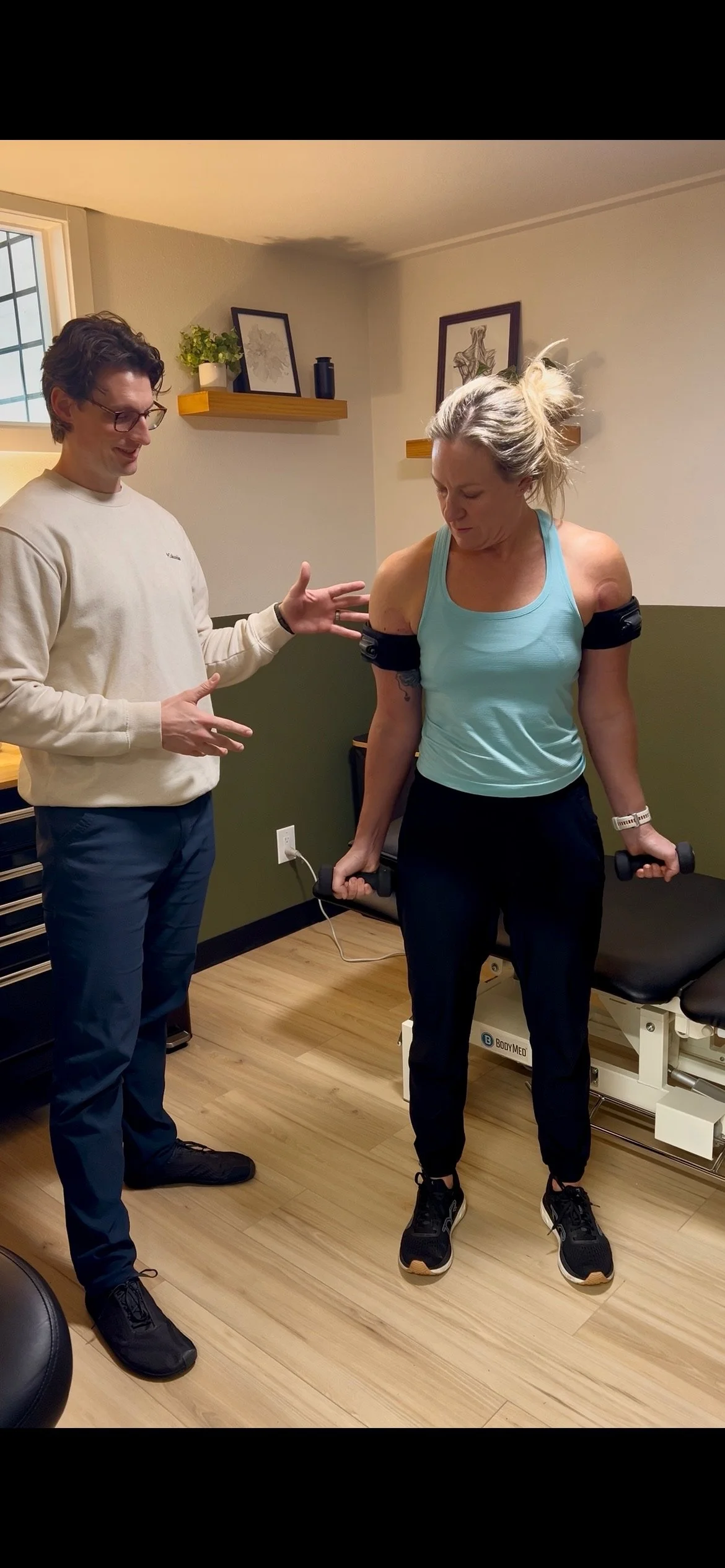
Strength rebuilding: progressive loading of the surrounding musculature, including BFR where appropriate in the early stages, advancing toward full functional strength.
Return to activity: sport-specific or activity-specific preparation, including neuromuscular control, power, and the confidence to trust the repaired tissue under load.
Treatment we use for post-surgical rehabilitation:
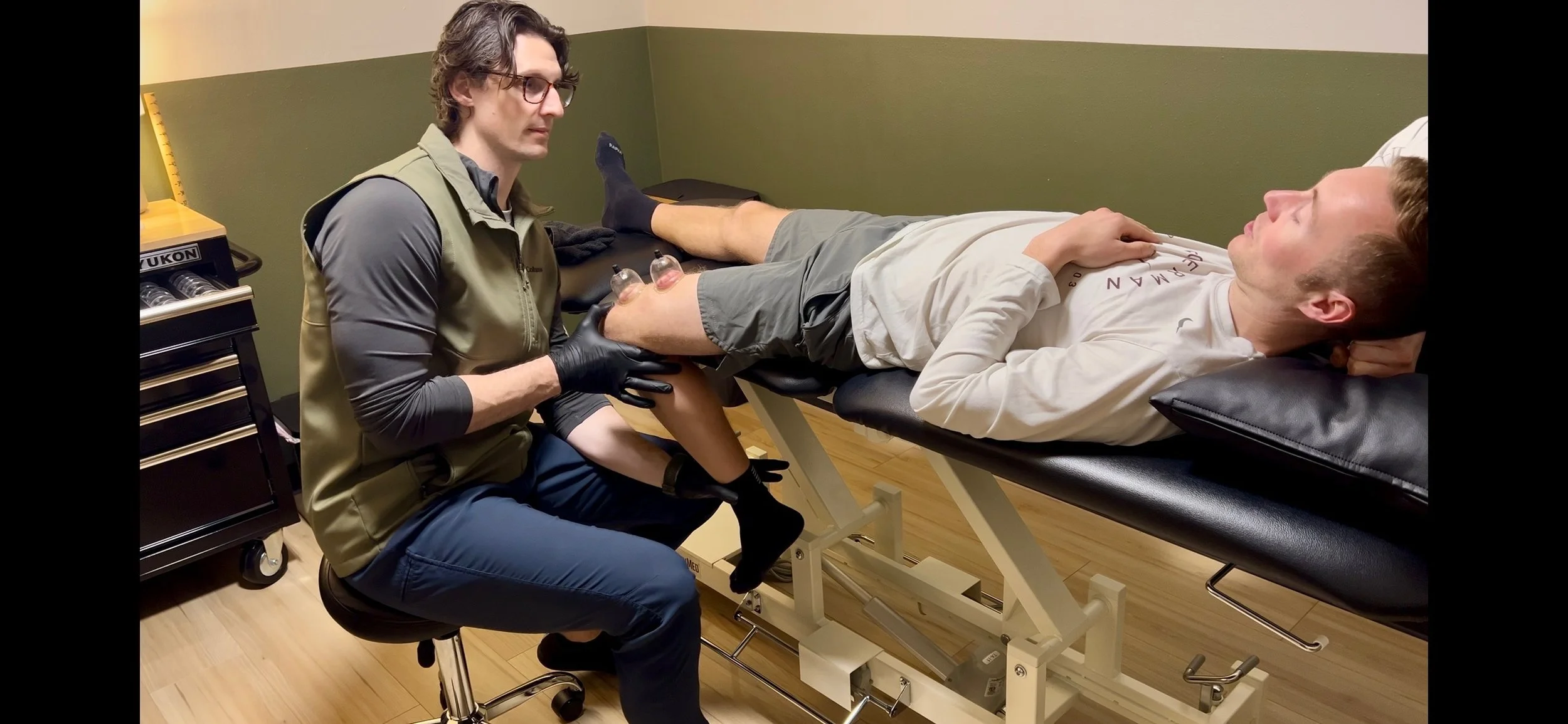
Manual Therapy — joint mobilization and soft tissue work to restore mobility and reduce pain in the early recovery window
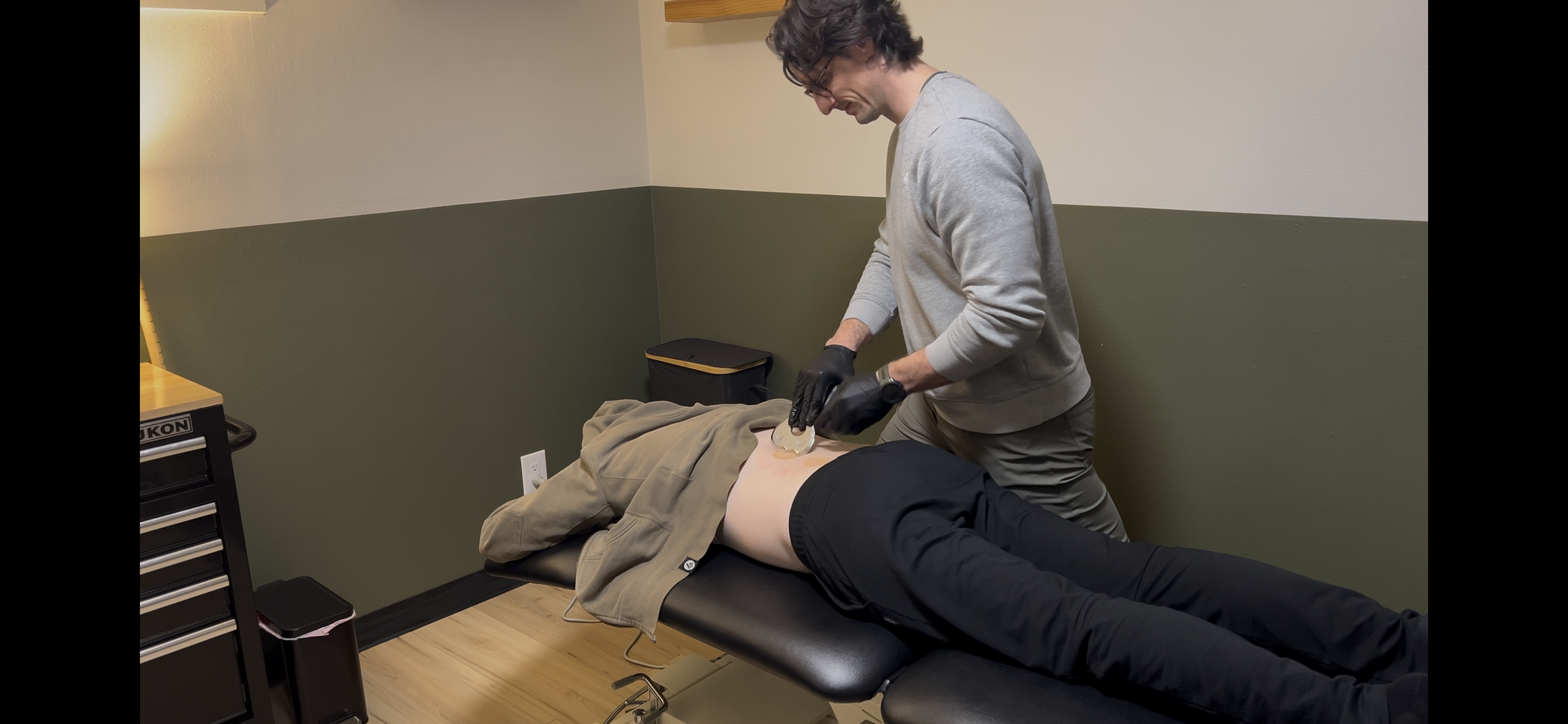
IASTM (Instrument Assisted Soft Tissue Mobilization) — targeted work on scar tissue and fascial restrictions around the surgical site
Myofascial Decompression (Cupping) — decompress tissue and improve circulation to healing structures
Blood Flow Restriction Training (BFR) — effective muscle activation at low loads, particularly valuable in the early post-surgical period when full loading isn't yet appropriate
Neuromuscular Electrical Stimulation (NMES) — used selectively in the early stages of knee surgery rehab to help reactivate muscles that have been inhibited by swelling and pain
Exercise Prescription — phased progressive strengthening and conditioning programs built around your surgical timeline and return-to-activity goals
Education on Safe Return to Activity — clear guidance on load progression, activity modification, and the clinical milestones that indicate readiness to advance
What to Expect at Your First Appointment
Your first visit is a full hour with your physical therapist. You'll walk through your surgical history, your surgeon's protocol, and what your recovery has looked like so far. From there, your physical therapist will assess your current mobility, strength, and movement patterns to establish a baseline and build a plan around where you are right now.
Most patients leave the first appointment with a clear picture of what the coming weeks look like and specific tools to start making progress immediately. The goal is never to rush the timeline. It's to make sure you're doing everything possible within it.
Oregon is a direct access state. For most post-surgical patients, a referral from your surgeon is standard and will be on file. If you're coming in without one, that's fine too.
Common Questions About Post-Surgical Rehab
When should I start PT after surgery?
As soon as your surgeon clears you, which for most orthopedic procedures is within the first one to two weeks. Early mobilization within the constraints of the surgical repair produces consistently better outcomes than waiting until you feel ready. The longer stiffness and muscle inhibition go unaddressed, the harder they are to reverse.
My surgeon gave me a home exercise program. Do I still need PT?
A home exercise program is a starting point, not a complete rehab plan. It doesn't account for how your tissue is actually responding, what compensations are developing, or when you're ready to progress. One-on-one PT provides the assessment, progression, and hands-on treatment that a sheet of exercises can't replicate.
I had surgery a year ago and still don't feel right. Is it too late for PT?
No. Plateaus after surgery are common, particularly when the initial rehab was limited or ended too early. Persistent weakness, stiffness, or movement compensations that developed during recovery can often be meaningfully addressed even well after the surgical window.
Will my insurance cover post-surgical PT?
Timber and Iron is in-network with First Choice Health, Regence Blue Cross Blue Shield, and MODA Health, and accepts Motor Vehicle Accident and Workers Compensation claims. Post-surgical PT is typically a covered benefit. Contact your insurance provider to confirm your specific benefits before your first visit.
Do I need a referral?
Oregon is a direct access state, so no referral is required to book. Most post-surgical patients will have documentation from their surgeon that we can work from directly.
Ready to make the most of your recovery? Book directly at HERE
This content is for educational purposes only and does not constitute medical advice. For guidance specific to your situation, schedule a consultation at Timber and Iron Physical Therapy.